
Post
Outliers – The Story of Success 2026
May
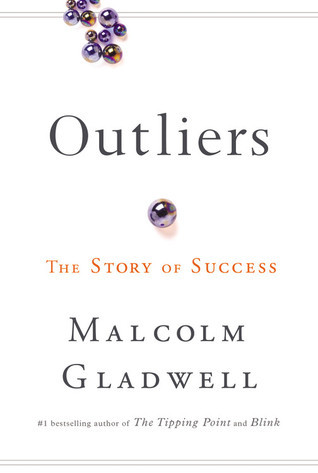
Outliers: The Story of Success by Malcolm Gladwell is a compelling and thought-provoking book published in 2008 that fundamentally changed how millions of people understand achievement. Gladwell, a master storyteller and staff writer for The New Yorker, argues that the traditional narrative of success — brilliant individuals rising purely through talent, intelligence, and hard work — is incomplete and often misleading. True success, he claims, is heavily shaped by hidden advantages, cultural legacies, timing, opportunity, and sheer luck. The book’s title refers to statistical outliers: people who achieve extraordinary success that lies far outside the normal distribution. By examining their stories closely, Gladwell reveals the unseen forces that create them.
Outliers is not a traditional self-help book offering a step-by-step formula. Instead, it is a work of social science journalism that blends research, history, psychology, and memorable anecdotes. It challenges readers to think more humbly and contextually about success while encouraging society to create more opportunities for others to become outliers themselves.
The Matthew Effect and the Importance of Timing
Gladwell opens with the concept of the Matthew Effect, named after a biblical passage: “For unto every one that hath shall be given, and he shall have abundance.” Small initial advantages compound dramatically over time.
A striking example is Canadian hockey players. Those born in the first few months of the year (January to March) are older and physically more mature when youth leagues begin. They receive better coaching, more ice time, and more practice, creating a cumulative advantage that often leads to professional careers. The same pattern appears in education, business, and other fields. Being in the right place at the right time — or having a small head start — can make an enormous difference.
This leads into one of the book’s most famous ideas: the 10,000-Hour Rule. Gladwell argues that mastering any complex skill requires roughly 10,000 hours of deliberate practice. The Beatles played over 1,200 live performances in Hamburg before breaking through in Britain, accumulating massive hours. Bill Gates had rare access to a high-school computer in 1968 — an extraordinary opportunity at the time — allowing him to log thousands of programming hours before most people had even seen a computer. Talent matters, but opportunity to practice at the highest level is what separates the good from the truly great.
Practical Intelligence and Cultural Legacies
In the second part of the book, Gladwell explores how intelligence alone is not enough. He distinguishes between analytical intelligence (measured by IQ) and practical intelligence — the ability to read social situations, negotiate, and understand unspoken rules.
Christopher Langan, a man with an off-the-charts IQ who grew up in poverty, failed to thrive academically and professionally because he lacked the practical skills and support systems that wealthier, better-connected individuals possess. In contrast, Robert Oppenheimer, despite serious personal issues, navigated elite institutions successfully due to his upbringing and social savvy.
Gladwell then dives into cultural legacies — deeply ingrained attitudes and behaviors passed down through generations that profoundly influence outcomes.
One powerful case study involves plane crashes. Korean Air had a troubling safety record in the 1990s due to hierarchical cockpit culture where co-pilots hesitated to challenge captains. After addressing these cultural norms through training in communication (mitigated speech), the airline dramatically improved its safety. Similarly, Gladwell links the high performance of Asian students in mathematics to historical legacies of rice farming, which required intense, persistent effort and rewarded meticulous work. This cultural emphasis on diligence, combined with the logical structure of number systems in Asian languages, contributes to stronger math outcomes.
The Stories of Success: From Garment Workers to Geniuses: Outliers – The Story of Success
Gladwell humanizes his arguments through rich narratives. He examines the success of Jewish immigrants in the New York garment industry in the early 20th century. Their descendants became influential lawyers because the skills and work ethic developed in the clothing trade translated into legal practice during a period of massive legal and regulatory change.
He also explores the “Roseto Mystery” — a close-knit Italian-American community in Pennsylvania with unusually low rates of heart disease despite poor diets and smoking. The secret was not genetics or lifestyle alone but the strong social bonds, community support, and cultural cohesion that protected their health.
Another memorable section looks at why many tech billionaires (Bill Gates, Steve Jobs, Paul Allen) were born around 1955. They were old enough to benefit from the personal computer revolution but young enough to take big risks without established careers to lose. Timing, again, proved decisive.
Criticisms and Limitations
Outliers was a massive bestseller and sparked widespread discussion, but it has also faced criticism. Some academics argue that Gladwell oversimplifies complex research. The 10,000-Hour Rule, for instance, has been challenged by studies showing that deliberate practice is important but not nearly as deterministic as presented — innate talent, genetics, and other variables still play significant roles.
Critics also note that while Gladwell celebrates context and luck, he sometimes underplays individual agency and resilience. Readers may walk away feeling that success is largely predetermined, which can feel disempowering. Additionally, some examples have been accused of cherry-picking data to fit the narrative.
Despite these points, the book’s strength lies in its accessibility and big-picture thinking. It democratizes success by showing it as a systemic and cultural phenomenon rather than a purely personal one.
Why Outliers Matters in 2026
More than 15 years after publication, Gladwell’s ideas feel remarkably relevant. In today’s AI-driven world, where technology creates new winners and losers at astonishing speed, understanding timing and opportunity is crucial. The rise of tech entrepreneurs, content creators, and athletes continues to show how early access, networks, and cultural factors create massive advantages.
The book also speaks powerfully to ongoing debates about inequality, education, and social mobility. If success depends so heavily on hidden advantages, then societies have a responsibility to create more “outlier factories” — better early education, expanded access to technology and mentorship, and policies that level the playing field. Gladwell’s message encourages parents, educators, and leaders to focus less on identifying “geniuses” and more on building environments where many more people can accumulate the necessary hours and opportunities.
In an era of hustle culture that glorifies overnight success stories on social media, Outliers provides a necessary corrective: behind every “self-made” person is a web of support, timing, and privilege that is rarely acknowledged. This humility can reduce burnout and self-blame while inspiring more empathetic and effective systems.
Key Takeaways for Readers
- Success is a collective endeavor. Acknowledge the role others and circumstances played in your achievements.
- Look for opportunities to log meaningful practice hours. Mastery requires volume and quality of effort.
- Cultural background and family legacies shape your worldview and capabilities — understand and leverage them.
- Practical intelligence and social skills often matter more than raw IQ in the real world.
- Create better systems. Instead of celebrating a few outliers, design environments that produce more of them.
Outliers ultimately delivers both a humbling and hopeful message. It humbles us by revealing how much of success lies outside individual control. It gives hope by showing that human environments and policies can dramatically expand the number of people who achieve extraordinary things.
Malcolm Gladwell doesn’t promise you will become the next Bill Gates by reading this book. Instead, he invites you to see success with new eyes — with greater gratitude for your own advantages, deeper empathy for others’ struggles, and a stronger commitment to creating fairer opportunities in the world around you.
In a society obsessed with meritocracy myths, Outliers remains an essential read for anyone who wants to understand how the world really works — and how we might make it work better for more people.
