
Post
Blink – The Power of Thinking Without Thinking
May
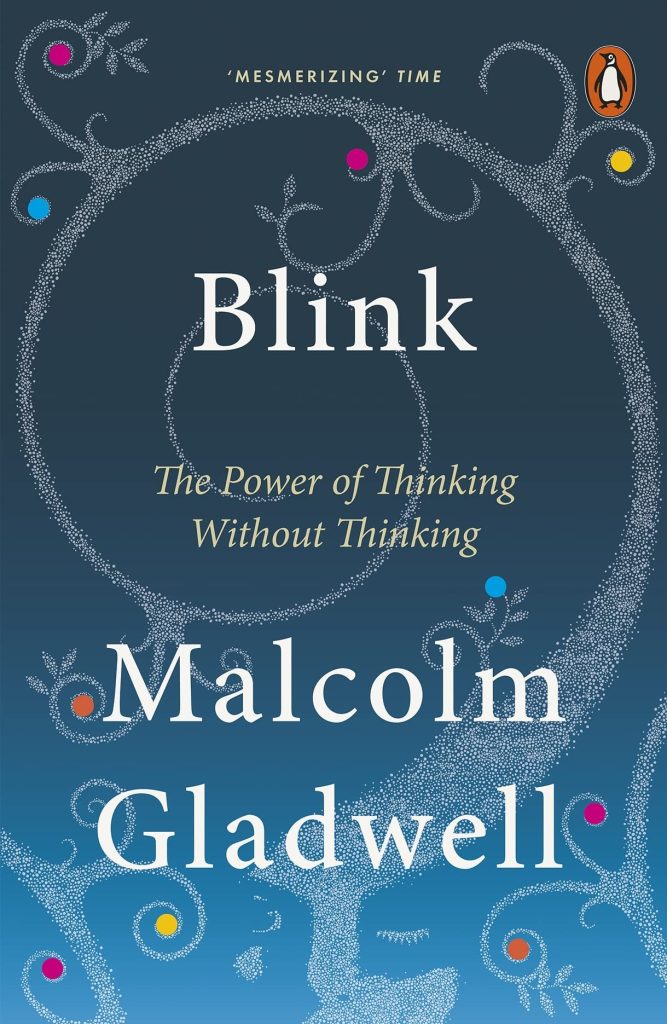
Blink: The Power of Thinking Without Thinking by Malcolm Gladwell is a groundbreaking exploration of the human mind’s remarkable ability to make quick, intuitive decisions. Published in 2005, the book became an instant bestseller and cemented Gladwell’s reputation as one of the most influential non-fiction writers of his generation. While Outliers examines the hidden patterns behind extraordinary success, Blink dives into the mysterious world of rapid cognition — those split-second judgments we make without conscious reasoning.
Gladwell argues that our unconscious mind can often process information more effectively and accurately than deliberate, analytical thinking — especially in complex situations where too much information can overwhelm us. However, these intuitive “blinks” can also lead us astray when influenced by bias, stress, or flawed conditions. The book is both a celebration of human intuition and a cautionary tale about its limitations.
The Adaptive Unconscious: Thinking Without Thinking
At the heart of Blink is the concept of the adaptive unconscious — a powerful part of our brain that constantly processes vast amounts of information below the level of conscious awareness. Gladwell compares it to a giant computer that thin-slices: it focuses on a few critical details rather than the entire picture and reaches conclusions in the blink of an eye.
This ability evolved for survival. In ancient environments, the ability to instantly detect danger or opportunity often meant the difference between life and death. Today, it manifests in expert judgments by firefighters, art experts, doctors, and musicians who “just know” something is right or wrong without being able to fully explain why.
Gladwell emphasizes that good decision-making is not always about gathering more information or spending more time analyzing. Sometimes, the best decisions come from trusting that first impression — provided it has been properly trained and protected from interference.
Thin-Slicing: The Power of the First Two Seconds
One of the book’s central ideas is thin-slicing — the ability to find patterns in events based on very narrow slices of experience.
A compelling example is the work of marriage researcher John Gottman. By analyzing just a few minutes of conversation between spouses, Gottman’s team can predict with over 90% accuracy whether a couple will stay together or divorce years later. They focus on subtle cues: tone of voice, facial expressions, and specific patterns of contempt or defensiveness.
Another famous case is the authentication of a ancient Greek statue (kouros) purchased by the Getty Museum. Art experts experienced an immediate sense of unease — something felt “off” — despite extensive scientific tests suggesting it was authentic. Their intuition proved correct; the statue was a modern forgery. The experts couldn’t initially articulate why they doubted it, but their unconscious minds had detected subtle inconsistencies.
Gladwell also explores speed dating, tennis players returning serves, and military commanders making battlefield decisions. In each case, too much deliberate thinking can actually hinder performance.
When Blink Fails: The Dark Side of Intuition
Not all rapid judgments are reliable. Gladwell devotes significant attention to situations where intuition goes wrong, often due to unconscious bias or overwhelming conditions.
One powerful section examines the shooting of Amadou Diallo, an unarmed Guinean immigrant killed by New York City police in 1999. Under high stress and with incomplete information, the officers made a catastrophic snap judgment. Gladwell uses this tragedy to illustrate how the same mechanism that produces brilliant intuition can produce fatal errors when context is distorted.
The book also tackles implicit bias through the Implicit Association Test (IAT). Most people, regardless of conscious beliefs, show unconscious preferences or prejudices based on race, gender, age, or other factors. These hidden biases can influence hiring decisions, medical diagnoses, and everyday interactions without us realizing it.
Another key insight is the concept of priming — how subtle environmental cues can heavily influence behavior and judgment. Gladwell shows how something as simple as words associated with old age can make people walk more slowly, demonstrating the unconscious mind’s sensitivity to suggestion.
Improving Our Blink Moments: Blink – The Power of Thinking Without Thinking
Gladwell is ultimately optimistic. While we cannot easily turn off our unconscious biases, we can create conditions that improve the quality of our rapid cognition:
- Training and experience sharpen intuition. Expert chess players, radiologists, and sommeliers develop highly refined thin-slicing abilities through thousands of hours of deliberate practice.
- Reducing overload: Too much information can lead to “analysis paralysis.” Sometimes filtering out extraneous data improves decisions.
- Creating better environments: Removing stress, time pressure, or misleading cues helps intuition flourish. For example, changing how police officers are trained or how orchestras conduct blind auditions can reduce bias.
- Structured decision-making tools: In high-stakes situations, combining intuition with checklists or protocols can prevent errors.
Gladwell highlights Paul Van Riper’s victory in a massive Pentagon war game. Despite being vastly out-resourced, Van Riper used rapid, intuitive decision-making to defeat a technologically superior opponent that relied on slow, centralized analytical planning.
Criticisms and Scientific Reception
Blink received widespread praise for its engaging storytelling but also faced criticism from psychologists and researchers. Some argued that Gladwell oversimplified complex science and cherry-picked examples. The unconscious mind is not always as accurate or efficient as portrayed, and relying too heavily on intuition can be dangerous in unfamiliar domains.
Critics also noted that while the book warns against bias, it sometimes presents intuitive successes in a way that could encourage overconfidence. Later research has complicated some of the studies Gladwell referenced, particularly around the reliability of thin-slicing in certain contexts and the long-term predictive power of tools like the IAT.
Nevertheless, the book sparked important conversations about decision-making, bias, and the limits of rational analysis that continue today.
Why Blink Matters in 2026
Nearly twenty years after publication, Blink feels more relevant than ever. We live in an era of information overload, where AI systems make split-second recommendations, algorithms predict behavior, and social media encourages instant reactions. Understanding the strengths and weaknesses of human rapid cognition helps us navigate this world more wisely.
In business, medicine, investing, sports, and policing, leaders continue to grapple with questions Blink raises: When should we trust gut feelings? How do we debias our intuition? How can we train better judgment in high-speed environments?
The rise of artificial intelligence adds a fascinating layer. Modern AI often mimics thin-slicing through pattern recognition on massive datasets. Comparing human intuition with machine “intuition” raises profound questions about decision quality, accountability, and the future of human expertise.
In a polarized world where snap judgments on social media can destroy reputations in seconds, Gladwell’s warning about the fragility of first impressions is especially timely. Learning to protect and refine our intuitive faculties may be one of the most important skills of the 21st century.
Key Takeaways
- Your unconscious mind is incredibly powerful — trust it when properly calibrated.
- Thin-slicing can yield surprisingly accurate judgments with very limited information.
- Stress, time pressure, and too much data can corrupt intuition.
- Unconscious biases affect everyone; awareness and structural changes can mitigate them.
- Great decision-makers know when to blink and when to deliberate.
- Experience and feedback are essential for developing reliable intuition.
Blink ultimately delivers a nuanced, empowering message. We are not slaves to either pure logic or blind instinct. By understanding how the mind works in the first two seconds, we can make better choices, reduce harmful biases, and appreciate the remarkable capabilities hidden inside every human brain.
Malcolm Gladwell invites us to respect the power of thinking without thinking — while remaining vigilant about its pitfalls. In doing so, he helps us become more thoughtful about the thousands of micro-decisions that shape our lives, relationships, careers, and societies.
Whether you are a leader, professional, parent, or simply someone who wants to understand yourself and others better, Blink offers profound insights wrapped in unforgettable stories. It reminds us that sometimes the most important answers come not from prolonged analysis, but from learning to listen — truly listen — to that quiet voice that speaks in the blink of an eye.
