
Post
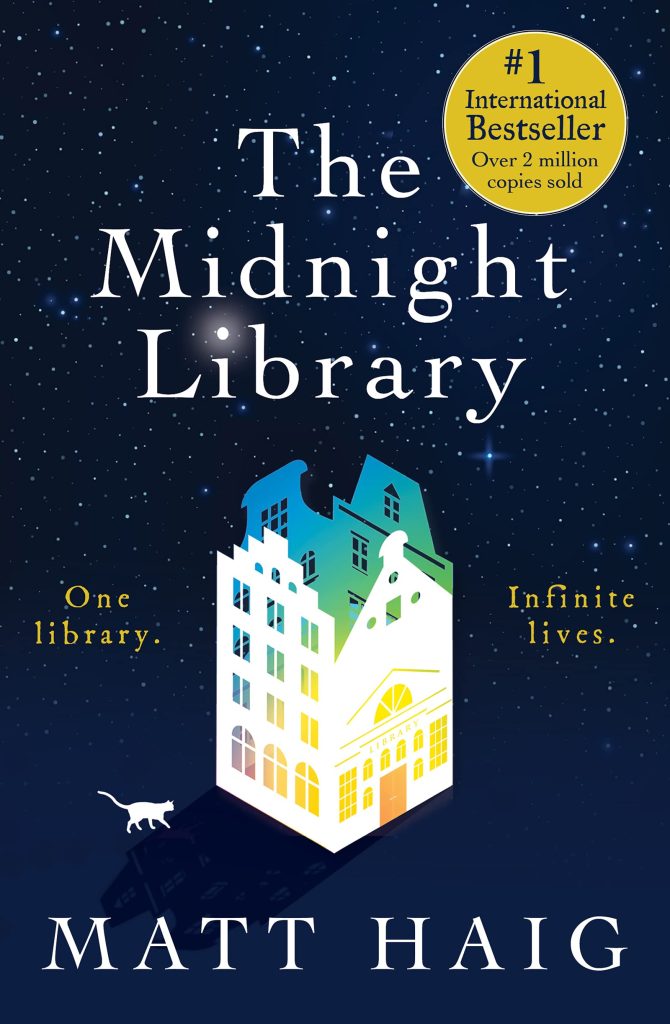
The Midnight Library – Between Life and Infinite Possibilities
May
The Midnight Library: Between Life and Infinite Possibilities by Matt Haig is a profound, life-affirming novel published in 2020 that quickly became a global bestseller and one of the most beloved books of the decade. Blending elements of fiction, philosophy, and self-help, Haig delivers an imaginative exploration of regret, depression, choices, and the beauty of ordinary existence. The novel resonated deeply during the uncertainty of the pandemic era and continues to offer comfort and perspective to readers worldwide.
At its core, The Midnight Library asks a universal question: What if you could live again and undo all your regrets? What if you could try every path not taken — different careers, relationships, cities, and versions of yourself — until you found the perfect life? Through a gentle, compassionate narrative, Haig suggests that the answer is far more nuanced and hopeful than we might expect.
The Premise: A Library Between Life and Death
Nora Seed is a woman in her thirties whose life feels like a catalog of failures. Once a promising swimmer, musician, and philosopher, she now works in a dead-end job, struggles with loneliness, financial insecurity, and fractured family relationships. Overwhelmed by regret and a deep sense of pointlessness, she decides to end her life.
Instead of death, Nora awakens in the Midnight Library — a vast, infinite space filled with millions of books. Each book represents an alternative version of her life, a parallel reality where she made a different choice at a crucial fork in the road. The kindly librarian, Mrs. Elm (a figure from Nora’s childhood), explains the rules: Nora can try any life she wants by opening the corresponding book. She will experience it fully until she feels disappointed or dies in that version, at which point she returns to the library to choose again.
If she finds a life she wants to stay in permanently, she will live it out. If she fails to choose before the library disappears, she will die for real.
Nora’s Journeys Through Infinite Possibilities
What follows is a series of vivid, emotionally rich explorations of “what if” lives. Nora becomes an Olympic swimmer, a rock star, a glaciologist in the Arctic, a pub owner, a philosopher, a wife and mother, and many other versions of herself. Some lives bring excitement and success; others reveal unexpected pain, loneliness, or moral compromise.
Through these experiences, Nora confronts the uncomfortable truth that every choice creates its own set of problems. The grass is not always greener. Even in lives that look perfect from the outside, there is struggle, sacrifice, and quiet regret.
Haig uses these parallel realities not as escapist fantasy but as a mirror to examine real human experiences: the weight of parental expectations, the cost of ambition, the complexities of love and friendship, the fear of mediocrity, and the quiet heroism of showing up for life every day.
Major Themes: Regret, Forgiveness, and the Value of Being Alive: The Midnight Library – Between Life and Infinite Possibilities
The novel’s greatest strength lies in its compassionate treatment of mental health and suicidal ideation. Haig, who has openly discussed his own struggles with depression and anxiety, writes with authenticity and empathy. He normalizes these feelings without romanticizing them, showing how depression distorts reality and magnifies regret while gently pointing toward hope.
Regret is examined from every angle. Nora initially believes that changing her past decisions would solve everything. Gradually, she learns that living with “good enough” choices, embracing imperfection, and focusing on small, meaningful connections often leads to deeper fulfillment than chasing an idealized life.
Another powerful theme is interconnectedness. Nora discovers that her actions ripple outward, affecting people in ways she never fully understood. Even small acts of kindness or presence can have profound, unseen consequences.
The book also celebrates ordinary life. In a world obsessed with extraordinary achievement and highlight reels, The Midnight Library offers a radical message: a life filled with quiet moments, imperfect relationships, and modest purpose can still be deeply meaningful and worth living.
Writing Style and Characters
Matt Haig’s prose is clear, warm, and emotionally intelligent. He balances philosophical ideas with accessible storytelling, making complex concepts feel intimate and relatable. The novel moves at a brisk pace, with short chapters that make it easy to read in one or two sittings, yet it lingers in the mind long afterward.
Nora is a deeply sympathetic protagonist — flawed, self-critical, and relatable. Mrs. Elm serves as both guide and emotional anchor, delivering wisdom with grandmotherly warmth. Supporting characters across different lives feel authentic rather than caricatures, each adding layers to Nora’s understanding.
Criticisms and Limitations
While widely praised, the book has faced some criticism. A few readers find the premise overly simplistic or the resolutions somewhat predictable. Others argue that certain philosophical conclusions lean toward cliché or feel rushed in the final act. Some mental health professionals have noted that while the book handles depression sensitively, it should not replace professional help for those in crisis.
Nevertheless, these critiques are relatively minor compared to the novel’s widespread emotional impact. Many readers report feeling lighter, more hopeful, and less burdened by their own regrets after finishing it.
Why The Midnight Library Matters in 2026
In 2026, as artificial intelligence, social media, and economic pressures continue to amplify comparison, FOMO (fear of missing out), and existential anxiety, the novel’s message feels more vital than ever. It serves as a powerful antidote to perfectionism and the illusion that another path would have solved all our problems.
The book speaks especially to those navigating career changes, relationship struggles, grief, or quarter-life/mid-life crises. It encourages readers to stop endlessly scrolling through other people’s highlight reels and start appreciating the unique, imperfect life in front of them.
Its themes of forgiveness — of others and especially of ourselves — remain timeless. In an increasingly polarized and fast-paced world, The Midnight Library reminds us to slow down, show up, and find meaning in the present moment.
Final Reflections and Takeaways
The Midnight Library is ultimately a love letter to being alive. Matt Haig doesn’t promise that life will be easy or fair. Instead, he suggests that life’s value lies in its very messiness — the relationships we build, the small acts of courage we perform daily, and our capacity to keep choosing life even when it hurts.
Key lessons include:
- Regret is a heavy burden that distorts reality.
- Every life contains both beauty and struggle.
- The best life isn’t the most successful one — it’s the one you choose to fully inhabit.
- Small, ordinary moments often hold the greatest magic.
- It’s never too late to begin again.
Whether you are struggling, questioning your path, or simply seeking comfort and perspective, this novel offers a warm, wise embrace. It doesn’t shout its wisdom — it whispers it gently, like a conversation with a kind friend at 3 a.m. when the world feels too heavy.
In the end, Nora’s journey teaches us what the wisest among us have always known: the best life is not the one with no regrets, but the one where we learn to live fully with the ones we have.
If you’ve ever wondered “what if,” The Midnight Library may help you answer with greater compassion, gratitude, and courage: “This life. Right now. It’s enough.”
