
Post
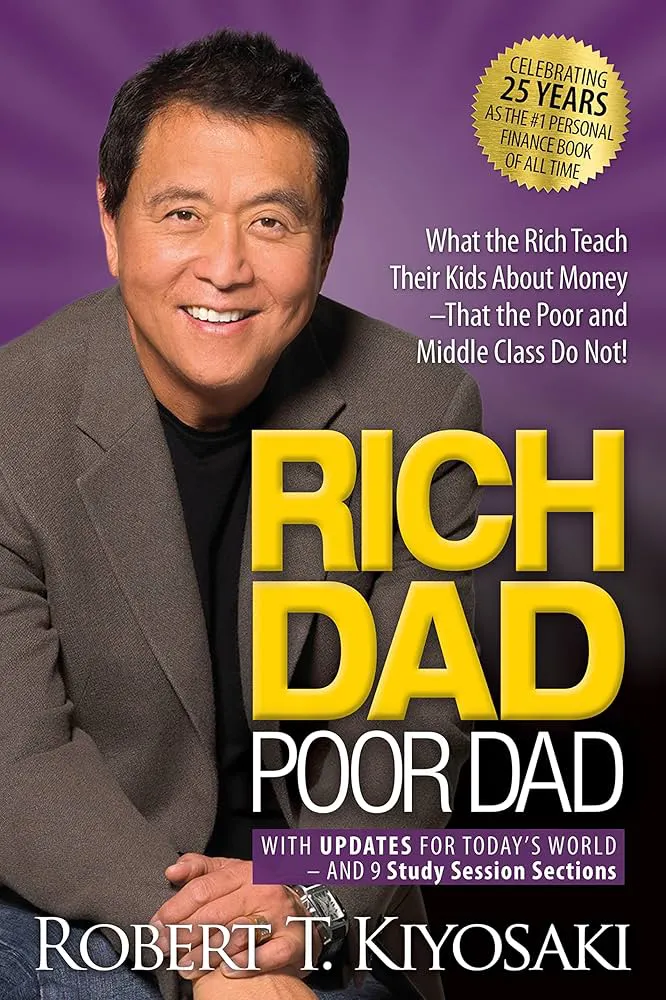
Rich Dad Poor Dad – What the Rich Teach Their Kids About Money 2026
May
Introduction
Why do some people achieve financial independence while others struggle despite earning a stable income? Why is financial education rarely taught in schools, even though it is one of the most important life skills? These questions are explored in Rich Dad Poor Dad by Robert T. Kiyosaki.
Rich Dad Poor Dad is one of the most influential personal finance books of all time. It challenges conventional beliefs about money, work, and wealth. Instead of focusing on earning a high salary, the book emphasizes building assets, understanding financial principles, and developing the mindset needed to achieve financial freedom.
Through the story of two father figures—one “rich” and one “poor”—Kiyosaki presents contrasting perspectives on money that shape the foundation of the book’s lessons.
The Story Behind the Book
The author describes growing up with two influential figures:
- His “poor dad”, who was highly educated, worked a stable job, and believed in traditional career paths
- His “rich dad”, who was less formally educated but financially successful and entrepreneurial
These two perspectives represent two different approaches to money:
- One focused on security and stability
- The other focused on opportunity and wealth creation
The contrast between these mindsets forms the core narrative of the book.
The Importance of Financial Education
One of the strongest arguments in the book is that schools do not teach financial literacy.
Students learn:
- Mathematics
- Science
- Language
But they rarely learn:
- How money works
- How to invest
- How to manage finances
As a result, many people enter adulthood without the knowledge needed to build wealth.
Kiyosaki emphasizes that financial education is essential for:
- Making informed decisions
- Avoiding debt traps
- Building long-term wealth
Assets vs Liabilities
One of the most important concepts in the book is the distinction between assets and liabilities.
According to Kiyosaki:
- Assets put money in your pocket
- Liabilities take money out of your pocket
Examples of assets:
- Rental properties
- Stocks and investments
- Businesses
Examples of liabilities:
- Expensive cars
- Large houses (without income generation)
- Consumer debt
This definition challenges traditional thinking, where items like homes are often considered assets regardless of their financial impact.
The Cash Flow Mindset
The rich focus on acquiring assets that generate income.
Instead of working for money, they aim to make money work for them.
This is done by:
- Investing in income-generating assets
- Building businesses
- Creating passive income streams
Over time, these income streams reduce dependence on a salary.
The Rat Race
Kiyosaki introduces the concept of the rat race.
This is a cycle where people:
- Work to earn money
- Spend most of it
- Need to keep working to maintain their lifestyle
Many people remain stuck in this cycle because:
- Expenses increase with income
- Debt accumulates
- Financial habits do not change
Escaping the rat race requires:
- Financial discipline
- Smart investing
- A shift in mindset
Mindset: Employees vs Entrepreneurs: Rich Dad Poor Dad – What the Rich Teach Their Kids About Money
The book highlights different ways people think about money.
Employee Mindset
- Seek job security
- Work for a paycheck
- Avoid risk
Entrepreneur/Investor Mindset
- Seek opportunities
- Build assets
- Take calculated risks
Kiyosaki encourages readers to adopt the second mindset.
The Role of Risk
Many people avoid financial risk, but Kiyosaki argues that:
- Risk comes from lack of knowledge
- Education reduces risk
Instead of avoiding risk entirely, the focus should be on:
- Learning
- Gaining experience
- Making informed decisions
Work to Learn, Not Just to Earn
One of the key lessons in the book is:
Work to learn, not just to earn.
Rather than choosing jobs solely for salary, consider:
- What skills you can develop
- What knowledge you can gain
Skills such as:
- Sales
- Communication
- Financial literacy
These skills can create long-term value.
Overcoming Fear and Doubt
Fear is one of the biggest obstacles to financial success.
Common fears include:
- Fear of losing money
- Fear of failure
- Fear of uncertainty
Kiyosaki suggests that successful people:
- Acknowledge fear
- Take action despite it
- Learn from mistakes
The Power of Investing
Investing is a key component of wealth building.
However, investing requires:
- Knowledge
- Patience
- Discipline
Rather than chasing quick profits, the book encourages:
- Long-term thinking
- Consistent investing
- Understanding the market
Income Streams
The book highlights different types of income:
- Earned income (salary)
- Portfolio income (investments)
- Passive income (businesses, rentals)
Financial freedom is achieved when passive income exceeds expenses.
Real-Life Applications
Personal Finance
- Track income and expenses
- Build savings
Investing
- Focus on assets
- Avoid unnecessary liabilities
Career
- Learn valuable skills
- Think long-term
Criticism of the Book
While the book is highly influential, it has received some criticism:
- Oversimplifies complex financial concepts
- Limited practical step-by-step guidance
- Some advice may not apply universally
Despite this, its core ideas remain impactful.
Strengths of the Book
- Easy to understand
- Inspiring mindset shift
- Practical core concepts
- Motivates financial awareness
Weaknesses of the Book
- Repetition of ideas
- Lack of detailed strategies
- Some controversial viewpoints
Key Takeaways
- Financial education is essential
- Focus on building assets
- Mindset influences wealth
- Passive income leads to freedom
- Risk can be managed through knowledge
Final Thoughts
Rich Dad Poor Dad is not just about money—it is about how you think about money.
It challenges deeply rooted beliefs and encourages readers to take control of their financial future.
Conclusion
If you want to understand the fundamentals of wealth building and develop a stronger financial mindset, Rich Dad Poor Dad is a powerful starting point. Its lessons can help you shift from working for money to making money work for you.
