
Post
Think and Grow Rich – The Classic Blueprint for Success 2026
May
Think and Grow Rich – The Classic Blueprint for Success
Introduction
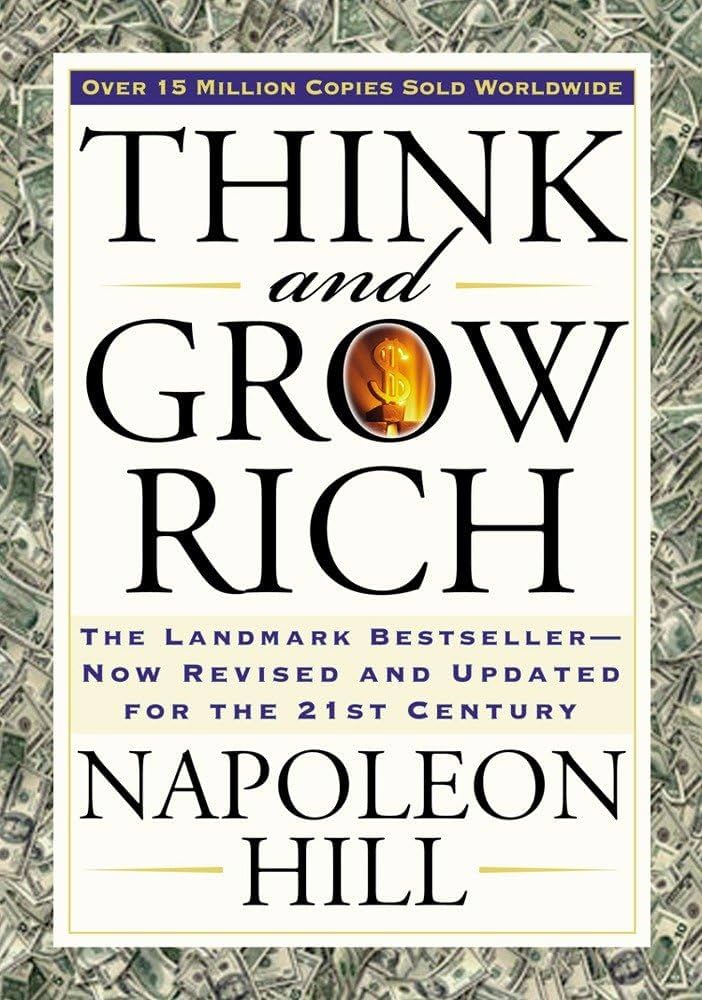
What truly determines success? Is it intelligence, talent, connections, or luck? These questions have fascinated people for generations, and they form the foundation of Think and Grow Rich by Napoleon Hill.
Originally published in 1937, this book has become one of the most influential works in the field of personal development and success philosophy. While the title emphasizes financial wealth, the principles within the book apply to all areas of life, including career, relationships, and personal growth.
Unlike traditional business or finance books, Think and Grow Rich focuses primarily on the mindset behind success. It explores how thoughts, beliefs, and attitudes shape outcomes. The central message is simple yet powerful: success begins in the mind, and those who learn to control their thinking can achieve extraordinary results.
Hill spent over two decades studying successful individuals, analyzing their habits, beliefs, and behaviors. From these observations, he developed a set of principles that he believed anyone could apply. These principles are not about quick success or shortcuts; instead, they emphasize discipline, persistence, and clarity of purpose.
Desire: The Starting Point of All Achievement
One of the most important concepts in the book is the idea that all success begins with a strong and definite desire.
Hill makes it clear that:
- A vague wish is not enough
- A weak goal will not lead to action
- Only a burning desire can drive persistence
Successful people are not casually interested in their goals—they are deeply committed. They are willing to invest time, effort, and energy into achieving what they want.
To turn desire into reality, Hill suggests that individuals must:
- Clearly define their goal
- Understand why it matters
- Commit fully to achieving it
Without a strong desire, it is easy to give up when challenges arise. With desire, obstacles become temporary setbacks rather than permanent barriers.
Faith: The Power of Belief
Faith is another critical element of success. In the context of the book, faith refers to a strong belief in oneself and in the possibility of achieving a goal.
Hill argues that:
- Belief influences behavior
- Behavior determines results
If you believe you can succeed, you are more likely to take action. If you doubt yourself, you are more likely to hesitate or give up.
Faith can be developed through:
- Repetition of positive thoughts
- Visualization of success
- Consistent action toward goals
Over time, these practices strengthen confidence and reduce fear.
Autosuggestion and the Subconscious Mind
Autosuggestion is the process of influencing the subconscious mind through repeated thoughts and affirmations.
The subconscious mind:
- Stores beliefs
- Influences decisions
- Drives behavior
By feeding the subconscious with positive and goal-oriented thoughts, individuals can reshape their mindset.
For example:
- Repeating goals daily
- Visualizing success
- Maintaining a positive attitude
These practices may seem simple, but they play a significant role in shaping long-term behavior.
Specialized Knowledge: Learning with Purpose: Think and Grow Rich – The Classic Blueprint for Success
Hill emphasizes that knowledge alone is not enough. What matters is how knowledge is used.
He distinguishes between:
- General knowledge
- Specialized knowledge
Successful individuals focus on acquiring knowledge that directly supports their goals.
For example:
- A business owner studies marketing and finance
- A developer focuses on technical skills
- A writer develops communication abilities
Learning becomes more effective when it is purposeful and aligned with clear objectives.
Imagination: The Source of Ideas
Imagination is where ideas are born.
Hill describes two types of imagination:
- Synthetic imagination – combining existing ideas
- Creative imagination – generating new concepts
Innovation often comes from combining existing knowledge in new ways.
For example:
- A new business model
- A creative solution to a problem
- A unique product idea
Imagination transforms knowledge into opportunity.
Organized Planning: Turning Ideas into Action
Ideas alone are not enough—execution is essential.
Organized planning involves:
- Creating a clear strategy
- Taking consistent action
- Adjusting when necessary
Many people fail not because their ideas are bad, but because they lack a plan or fail to follow through.
Effective planning requires:
- Clear goals
- Defined steps
- Regular evaluation
Decision: The Power of Commitment
Successful people make decisions quickly and stick to them.
Unsuccessful individuals often:
- Delay decisions
- Overthink
- Change direction frequently
Decisiveness reflects clarity and confidence.
Once a decision is made, commitment becomes essential. Without commitment, even the best plans remain incomplete.
Persistence: The Key to Long-Term Success
Persistence is one of the most emphasized qualities in the book.
Challenges and failures are inevitable, but persistence allows individuals to:
- Continue despite setbacks
- Learn from mistakes
- Achieve long-term goals
Many people fail because they quit too soon. Persistence separates those who succeed from those who do not.
The Master Mind Principle
Hill introduces the concept of the Master Mind—a group of people working together toward a shared goal.
Benefits include:
- Shared knowledge
- Support and accountability
- Increased creativity
Collaboration often leads to better results than individual effort.
The Role of the Subconscious and Emotions
The subconscious mind is influenced by emotions, especially strong ones such as:
- Desire
- Faith
- Fear
Positive emotions can drive success, while negative emotions can create barriers.
Managing emotions is therefore an important part of achieving goals.
Fear: The Greatest Obstacle
Fear is identified as the main barrier to success.
Common fears include:
- Fear of failure
- Fear of criticism
- Fear of uncertainty
These fears often prevent people from taking action.
Overcoming fear requires:
- Awareness
- Confidence
- Willingness to act despite discomfort
Applying the Principles in Real Life
The ideas in Think and Grow Rich can be applied in many areas:
Career
Set clear goals and pursue them with persistence.
Business
Develop strategies and adapt to challenges.
Personal Growth
Build confidence and discipline.
Strengths of the Book
- Timeless principles
- Strong focus on mindset
- Motivational and inspiring
- Applicable across different fields
Weaknesses of the Book
- Some concepts are abstract
- Requires interpretation and application
- Repetition in certain sections
Key Takeaways
- Success begins with desire
- Belief shapes outcomes
- Persistence is essential
- Planning and action are required
- Mindset determines results
Final Thoughts
Think and Grow Rich is not about quick success—it is about building a mindset that leads to long-term achievement.
Its message remains powerful:
Your thoughts shape your reality.
Conclusion
If you want to achieve meaningful success, you must first develop the right mindset. By applying the principles in this book, you can turn ideas into action and goals into results.
