
Post
Zero to One – Notes on Startups, or How to Build the Future 1
May
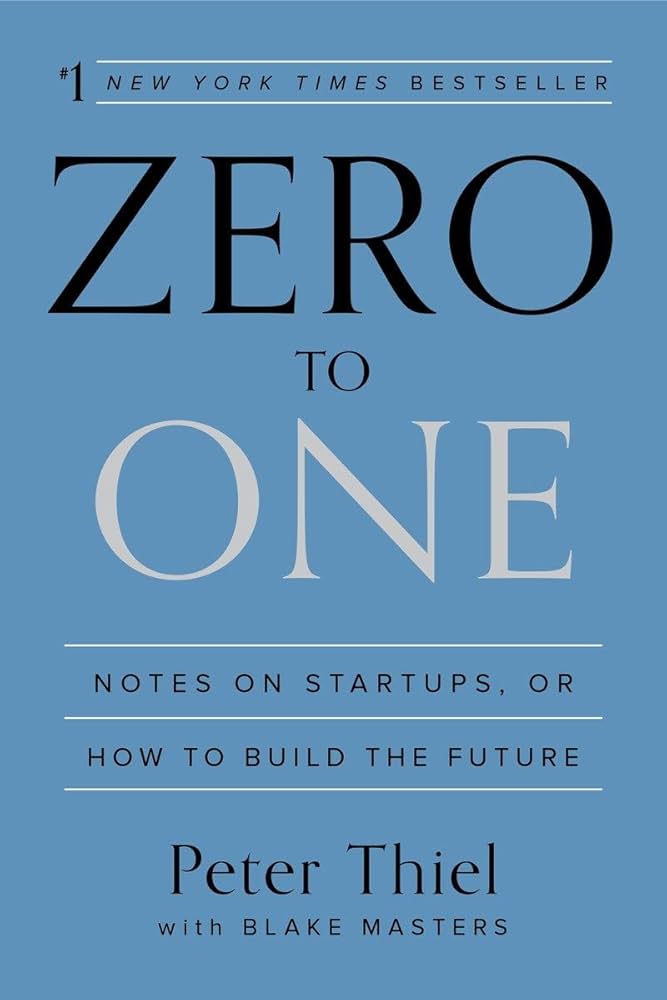
Zero to One: Notes on Startups, or How to Build the Future by Peter Thiel (with Blake Masters) is one of the most influential business books of the 21st century. Published in 2014, it distills lessons from Thiel’s experiences as co-founder of PayPal, early investor in Facebook, and founder of Palantir, alongside his Stanford lectures on startups. Far from a conventional “how-to” manual filled with checklists or generic advice, Zero to One is a philosophical manifesto on innovation, monopoly, and the nature of progress. It challenges entrepreneurs to create something genuinely new rather than compete in crowded markets.
The Core Thesis: Vertical Progress vs. Horizontal Progress
At the heart of the book is the distinction between two types of progress. Horizontal progress (going from 1 to n) means copying things that already work—globalization, more of the same, incremental improvements. It is easy to visualize because it builds on familiar models. Vertical progress (going from 0 to 1), by contrast, involves creating something entirely new: new technologies, new business models, new ways of doing things that didn’t exist before.
Thiel argues that true value creation and societal advancement come from vertical progress. Globalization without new technology is unsustainable in a world of scarce resources. China can copy what the West has built, but that merely spreads existing solutions. The future depends on inventors and entrepreneurs who build breakthroughs.
This idea sets the tone for the entire book. Every moment in business happens only once. “The next Bill Gates will not build an operating system. The next Larry Page or Sergey Brin won’t make a search engine. And the next Mark Zuckerberg won’t create a social network. If you are copying these guys, you aren’t learning from them.” Thiel urges readers to think originally rather than follow formulas or imitate successes from the past.
Lessons from the Dot-Com Bubble
In Chapter 2, Thiel reflects on the late 1990s dot-com boom and bust. The era taught valuable (if painful) lessons. Many companies failed because they chased hype without sustainable models—focusing on “getting big fast” at the expense of profits, ignoring sales, or scaling prematurely. Yet the survivors and subsequent giants like Amazon and Google proved that bold visions could work when grounded in reality.
Key takeaway: “Sales matter just as much as product.” Even the best technology needs effective distribution. Thiel notes that many engineers undervalue sales because it is often hidden or stigmatized, but great companies master both creation and delivery.
Why Monopolies Are Good (and Competition Is for Losers)
One of the book’s most provocative arguments is that monopolies—companies with significant market power and high profits—are the engines of innovation and progress. In perfect competition, companies fight over thin margins, innovate little, and ultimately destroy value for everyone except perhaps consumers in the short term. Creative monopolies, however, can afford to think long-term, invest in R&D, and deliver superior products.
Thiel contrasts this with the conventional view that “competition is healthy.” He points out that all happy companies are different: they solve unique problems or create unique value. Failed companies, by contrast, all suffer from the same issue—they cannot escape competition.
To build a monopoly, focus on four key characteristics:
- Proprietary technology: Something at least 10x better than existing alternatives.
- Network effects: The product becomes more valuable as more people use it.
- Economies of scale: Costs decrease dramatically as the business grows.
- Branding: A strong, defensible brand that enhances perceived value.
Importantly, start small: dominate a tiny market (a “small monopoly”) and expand outward. Facebook began by monopolizing Harvard, then colleges, then the world. Amazon started with books. Trying to conquer everything at once leads to failure.
Secrets and Contrarian Thinking: Zero to One – Notes on Startups, or How to Build the Future 1
Great companies are built on secrets—truths that are hard to discover and unpopular to believe. Thiel loves asking in interviews: “What important truth do very few people agree with you on?” This contrarian question forces original thought.
The world is full of hidden truths waiting to be uncovered. The best entrepreneurs see opportunities others dismiss as impossible or unprofitable. Secrets can be about nature (undiscovered scientific truths) or people (unmet needs or societal taboos). Finding and acting on a secret is what separates transformative businesses from mere imitators.
Definite Optimism and Planning the Future
Thiel critiques four views of the future:
- Indefinite optimism: The world will get better, but we don’t know how—common in finance and the modern West.
- Definite optimism: We have specific plans to build a better future—characteristic of the 19th and early 20th centuries (e.g., building railroads, going to the moon).
- Definite pessimism: Planning for a known decline (e.g., modern China’s approach in some views).
- Indefinite pessimism: Expecting decline without a clear plan.
He advocates for definite optimism. Startups succeed when founders have concrete plans rather than hoping for random success. “You are not a lottery ticket”—success is not random; it comes from deliberate action and good decisions.
The Power of Founders and Teams
Founders matter enormously. Thiel emphasizes the importance of a strong, cohesive team—often likening successful startups to a “cult” or “mafia” where people are deeply committed to a shared mission. Loyalty, shared vision, and complementary skills trump mere credentials.
Chapter 9 on “Foundations” stresses getting the early decisions right: ownership, incentives, and control. Bad early hires or misaligned equity can doom a company permanently.
The Seven Questions Every Business Must Answer
Thiel provides a practical framework with seven questions founders should answer:
- Engineering: Can you create breakthrough technology instead of incremental improvements?
- Timing: Is now the right time to start this business?
- Monopoly: Are you starting with a big share of a small market?
- People: Do you have the right team?
- Distribution: Do you have a way to deliver the product to customers?
- Durability: Will your market position be defensible in 10–20 years?
- Secret: Have you identified a unique opportunity that others don’t see?
Answering these honestly dramatically increases the odds of success.
Sales, Distribution, and the Hidden Mechanics
Thiel devotes attention to often-overlooked areas like sales. “If you build it, they will come” is a myth. Every business needs a distribution strategy, whether through direct sales, viral marketing, or platforms. He also discusses the “mechanics of mafia”—building a culture so strong that employees feel like they’re part of something transformative.
Criticisms and Lasting Relevance
Some critics note that Thiel’s defense of monopoly can seem self-serving for a billionaire investor, and examples from 2014 feel dated in the AI era. Yet the core principles remain powerful. In today’s world of AI, biotech, and climate tech, the call to build 0 to 1 breakthroughs is more urgent than ever. Incremental apps or me-too SaaS products rarely create enduring value or change the world.
Thiel’s contrarianism—questioning indefinite optimism, ESG fads, or pure market competition—continues to spark debate. His emphasis on long-term thinking and technological optimism counters short-termism prevalent in many industries.
Why Zero to One Matters Today
In an age of copycat startups, endless Series A/B funding for similar ideas, and global competition, Thiel’s message is refreshing and challenging. True entrepreneurship isn’t about optimizing existing models or chasing trends. It’s about uncovering secrets, building monopolies through superior technology and vision, assembling exceptional teams, and deliberately shaping the future.
The book is not just for founders. Investors, policymakers, engineers, and anyone interested in progress will find value in its pages. It encourages readers to ask: What valuable company is nobody building? What truth do you hold that few others accept?
Ultimately, Zero to One is a call to action. Progress is not inevitable. It requires courageous individuals willing to defy conventional wisdom, take calculated risks, and create the new instead of replicating the old. As Thiel writes, “We cannot take for granted that the future will be better than the present.” It is up to us—entrepreneurs, thinkers, and builders—to make it so.
By going from zero to one, we don’t just build better businesses. We build a better future.
