
Post
Harry Potter and the Sorcerer’s Stone – The Beginning of a Magical Journey 2026
May
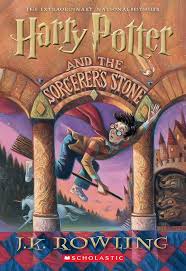
Harry Potter and the Sorcerer’s Stone – The Beginning of a Magical Journey (2026)
Harry Potter and the Sorcerer’s Stone by J.K. Rowling is the book that launched one of the most beloved literary and cultural phenomena of modern times. First published in the United Kingdom in 1997 as Harry Potter and the Philosopher’s Stone and later released in the United States in 1998 as Harry Potter and the Sorcerer’s Stone, this first installment in the seven-book series introduced readers to a hidden magical world existing alongside our own. What began as a children’s fantasy novel quickly transcended age boundaries, selling more than 120 million copies worldwide for this single volume alone and laying the foundation for a multi-billion-dollar franchise including books, films, theme parks, and merchandise.
More than just a fantasy adventure, Harry Potter and the Sorcerer’s Stone is a story about finding belonging, discovering courage, and choosing between good and evil. It remains a timeless classic that continues to guide new generations of readers into the magical world of wizards.
From the Cupboard Under the Stairs to the Wizarding World
The novel begins on what appears to be an ordinary street in Little Whinging, where the Dursley family — Vernon, Petunia, and their spoiled son Dudley — live a life obsessed with normality. Unbeknownst to them, their young nephew, Harry Potter, survived a devastating attack by the dark wizard Lord Voldemort, who murdered Harry’s parents, Lily and James Potter. On the night of the attack, Voldemort mysteriously vanished, leaving Harry with a lightning-shaped scar on his forehead.
For the next ten years, Harry grows up neglected and mistreated, sleeping in a cupboard under the stairs, wearing hand-me-down clothes, and enduring constant bullying from the Dursleys. His life changes forever on his eleventh birthday when a giant of a man named Rubeus Hagrid bursts through the door and delivers the life-changing news:
“Harry — you’re a wizard.”
From that moment, the story explodes into wonder. Hagrid takes Harry to Diagon Alley, a hidden magical street in London, where Harry discovers his fame in the wizarding world as “The Boy Who Lived.” He learns that he inherited a fortune, purchases his first wand, and receives his acceptance letter to Hogwarts School of Witchcraft and Wizardry.
Arrival at Hogwarts and the Formation of Friendship
Hogwarts becomes Harry’s true home. The castle, filled with moving staircases, talking portraits, and endless secrets, feels alive with magic. Harry is sorted into Gryffindor House, where he befriends Ron Weasley, a loyal and humorous boy from a large but loving wizarding family, and Hermione Granger, a brilliant Muggle-born witch known for her intelligence and strict respect for rules.
Together, the trio navigates classes in Potions, Transfiguration, and Defense Against the Dark Arts. They learn to play Quidditch, explore the mysteries of the castle, and uncover rumors surrounding the Sorcerer’s Stone — a legendary object capable of granting immortality that someone appears determined to steal.
Throughout the school year, Harry faces the cold hostility of the Potions professor Severus Snape, clashes with school bully Draco Malfoy, and begins piecing together the truth about his own past and the lingering threat of Voldemort.
Themes: Courage, Friendship, and Choosing Good: Harry Potter and the Sorcerer’s Stone – The Beginning of a Magical Journey 2026
Even in this first novel, Rowling skillfully weaves deeper themes beneath the magical surface:
Found Family and Belonging:
For an orphan who has never known love, Hogwarts and Harry’s friends become the family he has always longed for. The four houses — Gryffindor, Hufflepuff, Ravenclaw, and Slytherin — explore different virtues and the complexity of identity.
Courage and Bravery:
As Albus Dumbledore later explains, true courage is not the absence of fear but the willingness to face it. Harry’s determination to stand up for what is right, despite his youth and inexperience, defines his character.
Good Versus Evil:
The novel presents morality in a nuanced way. Not all “good” characters are flawless, and not every antagonist is entirely evil. Choices matter more than destiny.
Love as Protection:
The sacrificial love of Harry’s mother is the magic that saved his life and continues to protect him. This theme becomes central throughout the series but is powerfully introduced here.
Wonder in Everyday Life:
Rowling reveals magic hidden within ordinary things — mirrors reflecting deepest desires, candies that make people levitate, and the quiet joy of friendship.
Memorable Characters and Extraordinary World-Building
One of Rowling’s greatest achievements in this debut novel is her masterful world-building. She creates an entire magical society complete with its own economy (Galleons, Sickles, and Knuts), government (the Ministry of Magic), newspapers (The Daily Prophet), sports culture, and traditions — all grounded in vivid detail and memorable characters.
Important figures introduced in this book include:
- Albus Dumbledore — the wise, eccentric, and immensely powerful headmaster.
- Severus Snape — a mysterious and morally ambiguous professor.
- Rubeus Hagrid — the lovable half-giant groundskeeper with a heart of gold.
- Lord Voldemort — the terrifying dark force feared by nearly every wizard.
Rowling’s writing style is accessible yet richly literary, filled with humor, clever wordplay, and unmistakable British charm that appeals to readers of all ages.
Cultural Impact and Legacy
Harry Potter and the Sorcerer’s Stone was not merely a bestseller — it sparked a global reading revolution. It transformed millions of children into enthusiastic readers and united families through a shared love of storytelling. The novel’s success led to the hugely successful film adaptation released in 2001, starring Daniel Radcliffe, Emma Watson, and Rupert Grint.
The novel also inspired important conversations about imagination, diversity, and the enduring power of storytelling in the digital age. Attractions such as Universal’s Wizarding World of Harry Potter continue introducing new generations to the magic.
Why It Still Matters in 2026
More than twenty-five years after its publication, Harry Potter and the Sorcerer’s Stone remains remarkably relevant. In a world dominated by screens and shrinking attention spans, the novel reminds readers of the joy of immersive storytelling. Its themes of resisting bullies, confronting prejudice, and choosing kindness continue to resonate strongly today.
For younger generations facing anxiety, questions of identity, and an often uncertain world, Harry’s journey from loneliness to belonging offers hope. The story teaches that ordinary people — or ordinary wizards — can achieve extraordinary things through courage, friendship, and love.
Conclusion
Harry Potter and the Sorcerer’s Stone is more than the beginning of a book series — it is the beginning of a lifelong love of reading for countless people around the world. J.K. Rowling created not just a story, but an entire universe that feels as vivid and real as our own. The true magic lies not only in wands and spells, but in the universal truths about friendship, bravery, and choosing light over darkness.
Whether readers first encountered the book as children or return to it as adults, it continues to inspire wonder. It reminds us that even in the darkest cupboard under the stairs, hope can arrive in the form of an owl carrying a letter — inviting us into a world where magic is real, friendship is power, and every child has the potential to become a hero.
The journey that began with the famous line:
“Mr. and Mrs. Dursley, of number four, Privet Drive, were proud to say that they were perfectly normal, thank you very much.”
has grown into one of the greatest adventures in modern literature. And it all started here — with a boy, a scar, and the beginning of a magical journey that continues to capture hearts across the globe.
