
Post
Becoming – An Intimate Conversation with History
May
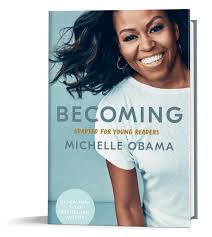
Becoming: An Intimate Conversation with History by Michelle Obama is a deeply personal, candid, and inspiring memoir published in 2018. More than a conventional autobiography or political book, it is an intimate reflection on identity, ambition, love, motherhood, and resilience. Through elegant storytelling and unflinching honesty, the former First Lady invites readers into her life journey — from the South Side of Chicago to the White House and beyond — while engaging in a larger conversation with American history, race, gender, and the pursuit of purpose.
The book sold over 15 million copies in its first year alone and remains one of the best-selling memoirs of all time. Its power lies not in celebrity gossip or political score-settling, but in Michelle Obama’s willingness to show her full humanity: her doubts, fears, triumphs, and ongoing evolution. “Becoming,” she writes, “is never giving up on the idea that there’s more growing to be done.”
Part One: Becoming Me – Roots on the South Side
Michelle Obama (née Robinson) grew up in a modest but stable working-class family on Chicago’s South Side in the 1960s and 70s. She describes a loving home with parents who emphasized education, discipline, and self-worth. Her father, Fraser Robinson, worked as a city pump operator despite being diagnosed with multiple sclerosis, teaching her quiet strength and dignity. Her mother, Marian, was practical, no-nonsense, and fiercely protective.
From an early age, Michelle was aware of the realities of race and inequality. She attended Whitney Young High School, a selective magnet school, where she excelled academically but sometimes felt the sting of lowered expectations. She later studied at Princeton University, where she grappled with being one of the few Black students on campus. Her senior thesis examined the experiences of Black alumni, revealing early signs of the analytical mind and social consciousness that would define her later work.
These formative years shaped her belief in hard work and the importance of representation. She recounts feeling the pressure of “twice as good” — the idea that Black Americans must outperform others simply to be seen as equal.
Part Two: Becoming Us – Love, Partnership, and Career
One of the memoir’s most charming sections details how Michelle met Barack Obama. As a young lawyer at a prestigious Chicago firm, she was assigned to mentor the brilliant but unconventional Barack. Their courtship is portrayed with warmth and humor — from their first date (where he arrived late) to their differences in personality and outlook on life.
Their marriage becomes a central theme. Michelle openly discusses the challenges: Barack’s political ambitions, long absences, her own career sacrifices, and the struggle to maintain balance. She shares fertility struggles, the use of IVF for their daughters Malia and Sasha, and the everyday realities of raising a family while pursuing ambitious careers. The book humanizes the Obamas, showing them not as political icons but as a couple navigating love, compromise, and mutual support.
Part Three: Becoming More – The White House Years
Michelle’s time as First Lady (2009–2017) forms the emotional core of the book. She describes the surreal experience of moving into the White House with young children while the country grappled with economic crisis and deep divisions. The weight of being the first Black First Lady was immense. She faced racist caricatures, criticism for everything from her bare arms to her choice of schools for her daughters, and constant scrutiny.
Rather than shrink, she chose to expand. She launched initiatives like “Let’s Move!” to combat childhood obesity, supported military families, and championed girls’ education through “Let Girls Learn.” She reflects on the delicate balance of being authentic while representing the nation. The White House years brought both joy — meeting world leaders, traveling, and watching her husband make history — and profound loneliness and exhaustion.
She writes movingly about the emotional toll of political life, the constant threat of violence, and the pain of seeing her husband vilified. Yet she also found purpose in using her platform to connect with everyday Americans, especially young people and women.
Key Themes and Lessons: Becoming – An Intimate Conversation with History
Identity and Becoming The book’s central metaphor — “becoming” — emphasizes that identity is not fixed. We are continually shaped by experiences, choices, and reflection. Michelle refuses to be defined solely by her husband’s achievements or societal expectations.
Race in America Becoming offers a nuanced, personal perspective on systemic racism. She discusses the fear Black parents feel for their children, the burden of representation, and the slow, imperfect progress of the nation. Her reflections gained renewed relevance amid national conversations on racial justice.
Motherhood and Ambition Michelle is refreshingly honest about the guilt, joy, and complexity of being a working mother. She rejects the myth of “having it all” and instead advocates for making intentional choices and building supportive communities.
Resilience and Hope Despite challenges, the memoir radiates optimism grounded in realism. She encourages readers to “go high” when others go low — a phrase that became a cultural touchstone.
Public Service and Authenticity She shows that leadership can be warm, empathetic, and strategic rather than loud or domineering.
Criticisms and Reception
Critics and readers largely praised the book for its intimacy, elegance, and emotional intelligence. Some conservatives criticized it as too political or self-serving, while a few progressives wanted sharper commentary on policy failures. A small number found certain sections slow or overly polished. Overall, however, Becoming was celebrated for its accessibility and humanity. It appealed far beyond traditional political audiences, resonating especially with women, people of color, and first-generation professionals.
Why Becoming Matters in 2026
More than seven years after publication and nearly a decade after leaving the White House, Michelle Obama’s memoir feels enduringly relevant. In a polarized, social media-driven world, her emphasis on going high, building community, and staying authentic offers a counter-narrative to cynicism and outrage culture.
The book continues to inspire conversations about women’s leadership, work-life integration, and racial equity. As debates around identity, representation, and political civility evolve, Michelle’s voice remains a steady, thoughtful presence. For young readers — particularly girls and young women — it serves as both mirror and map, showing that excellence and vulnerability can coexist.
Her post-White House work through the Obama Foundation, higher education initiatives, and continued public engagement demonstrates that “becoming” is an ongoing process, not a destination reached upon leaving office.
Final Reflections
Becoming is ultimately a love letter to possibility. Michelle Obama does not present herself as extraordinary or flawless. Instead, she shows how an ordinary girl from the South Side, supported by family, education, and determination, could rise to the world’s most visible stage while remaining grounded in her values.
The memoir’s greatest gift is its invitation to readers to examine their own journeys. What stories are you telling yourself? What voices are you listening to? What version of yourself are you still becoming?
In elegant, conversational prose that feels like a long talk with a wise friend, Michelle Obama reminds us that history is not only made by those in power but also by how ordinary people choose to live, love, struggle, and grow. Her story is both deeply personal and profoundly American — a testament to resilience, grace under pressure, and the quiet power of becoming your fullest self.
Whether you are navigating career challenges, raising children, confronting injustice, or simply searching for direction, Becoming offers companionship, insight, and quiet encouragement. It is a book that does not just recount history — it becomes part of the reader’s own journey toward a more intentional and hopeful life.
