
Post
Can’t Hurt Me – Master Your Mind and Defy the Odds 1
May
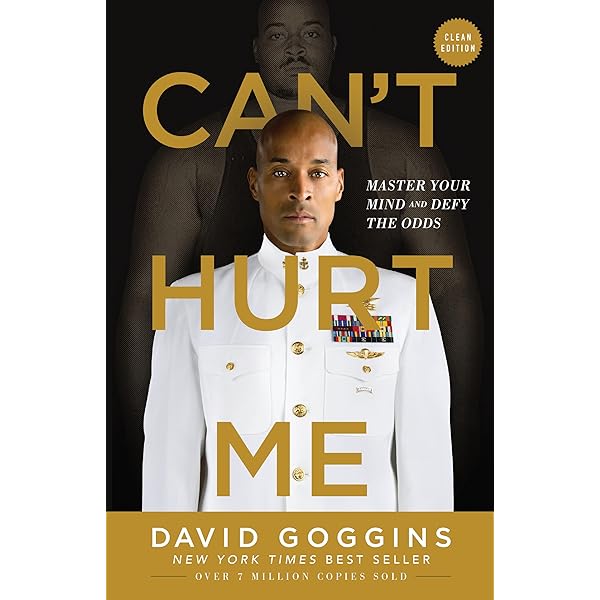
Can’t Hurt Me: Master Your Mind and Defy the Odds 1 by David Goggins is a raw, unflinching memoir and self-help manifesto that has inspired millions since its release in 2018. Goggins, a retired Navy SEAL, ultramarathon runner, and former Guinness World Record holder for pull-ups, shares his extraordinary journey from a traumatic childhood marked by abuse, poverty, racism, and self-doubt to becoming one of the world’s most mentally tough individuals. The book is not just a story of survival — it is a battle manual for building unbreakable mental resilience. Goggins argues that most people live far below their potential, tapping into only about 40% of their capabilities. Through relentless self-discipline, embracing suffering, and radical honesty, anyone can push past perceived limits and defy the odds.
Unlike polished motivational books that promise easy transformations, Can’t Hurt Me is gritty, profane, and demanding. Goggins doesn’t offer comfort — he offers challenges. Each chapter blends vivid storytelling from his life with practical “challenges” for readers to apply immediately.
A Childhood Forged in Fire
Goggins grew up in a violent household in upstate New York. His father, a manipulative and abusive man who ran a skating rink, subjected the family to physical and emotional torment. Racism compounded the pain — Goggins faced slurs and exclusion as one of the few Black children in his environment. By his teens, he was overweight, stuttering, depressed, and trapped in a cycle of fear and mediocrity. He worked dead-end jobs and felt his life had no future.
This early section establishes the book’s core message: your past does not define you. Goggins turned his “bad hand” into fuel. He calls this process “going to war with yourself” — confronting every excuse, insecurity, and limitation head-on rather than playing the victim.
The Transformation: Navy SEALs and Beyond
At age 24, weighing over 280 pounds, Goggins decided to enlist in the military. He lost over 100 pounds in three months through brutal discipline and joined the Navy SEALs. He survived the notoriously difficult BUD/S training — not once, but three times due to medical rollbacks — earning the nickname “the Toughest Man Alive” in some circles.
His story escalates through Hell Week, Ranger School, Air Force Tactical Air Controller training, and a series of extreme endurance feats: completing over 60 ultramarathons, running 100+ miles with broken bones and severe injuries, and setting records while raising money for charity (including the Special Operations Warrior Foundation). Goggins repeatedly broke his body only to rebuild it stronger, proving that the mind can override physical limits.
Key Mental Tools and Philosophies: Can’t Hurt Me – Master Your Mind and Defy the Odds
The 40% Rule: This is perhaps Goggins’ most famous concept. When your mind tells you that you’re exhausted and can’t go further, you’re only at about 40% of your true capacity. The mind quits long before the body does. By pushing through that mental wall repeatedly, you access hidden reserves of strength. Goggins applied this during races where he ran on stress fractures, with kidney failure, or after severe dehydration.
The Accountability Mirror: Goggins kept a mirror in his home covered with Post-it notes listing his weaknesses, goals, and insecurities. Every day, he faced himself brutally honestly. No more lying or sugarcoating. This daily confrontation became the foundation for change. Readers are challenged to create their own version — listing flaws and daily non-negotiable tasks.
Callousing the Mind: Just as hands develop calluses from repeated friction to withstand pain, the mind can be toughened through deliberate exposure to discomfort. Goggins advocates seeking out hard things daily — cold showers, extra workouts, difficult conversations — to build tolerance for suffering. Comfort is the enemy of growth.
The Cookie Jar Method: When facing doubt or pain, reach into your mental “cookie jar” of past accomplishments and victories. Remind yourself of previous times you overcame odds. This builds confidence when motivation fades.
Taking Souls: In competition or life, outperform others so dramatically that you break their spirit. Outwork, outlast, and outprepare everyone around you.
Goggins also stresses the difference between motivation (fleeting and unreliable) and drive (an internal, obsessive commitment). Motivation gets you started on good days; drive keeps you going when everything hurts.
The Challenges: Turning Reading into Action
What sets Can’t Hurt Me apart is its interactive nature. Each chapter ends with a specific challenge:
- Write down your full story — the good, bad, and ugly.
- Use the Accountability Mirror daily.
- Schedule workouts or tasks outside your comfort zone.
- Inventory your weaknesses and attack them systematically.
- Visualize success while preparing for the worst.
These exercises force readers to move beyond inspiration into implementation.
Criticisms and Controversies
While enormously popular, the book has drawn criticism. Some readers find Goggins’ style overly macho, aggressive, or even masochistic. His willingness to destroy his body raises questions about long-term health and sustainability. Critics argue the approach may not suit everyone, particularly those with serious mental health conditions, trauma, or physical limitations. The intense self-criticism could border on toxic for some personalities.
Detractors also note that while Goggins’ story is extraordinary, not everyone starts with the same baseline or can afford to risk severe injury. His writing can feel repetitive in the later sections, hammering the same “embrace the suck” message. Additionally, some question the veracity of certain dramatic claims, though the core principles remain powerful regardless.
Why Can’t Hurt Me Matters in 2026
In an era of comfort, instant gratification, and endless distractions, Goggins’ message is a necessary shock to the system. With remote work, AI automating effort, and rising mental health challenges tied to avoidance of discomfort, his philosophy cuts through the noise. Mental toughness is becoming a rare and valuable skill.
The book resonates especially with athletes, entrepreneurs, military personnel, and anyone facing seemingly impossible obstacles. Its emphasis on personal responsibility and turning pain into power offers a counter-narrative to victimhood culture and quick-fix wellness trends.
Goggins has continued evolving since the book — his follow-up Never Finished expands on these ideas — but Can’t Hurt Me remains the foundational text. It has helped countless people start running, improve discipline, change careers, or simply get out of bed with purpose on hard days.
Final Reflections: Becoming Uncommon
Can’t Hurt Me is ultimately a call to arms against mediocrity. Goggins’ life proves that ordinary (or even disadvantaged) people can achieve extraordinary things by mastering their minds. The hero of the story, he repeatedly states, is not him — it is the reader who chooses to apply the lessons.
Key takeaways include:
- Your limits are mostly illusions created by a lazy mind.
- Radical self-honesty is the starting point of all growth.
- Suffering is the path to greatness — embrace it voluntarily.
- Consistency and obsession beat sporadic motivation.
- You must earn your place every single day.
If you’re tired of average results and ready to confront yourself, this book will light a fire. It won’t be comfortable. It might exhaust you. But that’s exactly the point. As Goggins says, “When you think you’re done, you’re only 40% done.”
The question the book leaves you with is simple yet terrifying: Are you ready to go to war with yourself?
