
Post
Ikigai – The Japanese Secret to a Long and Happy Life 1
May
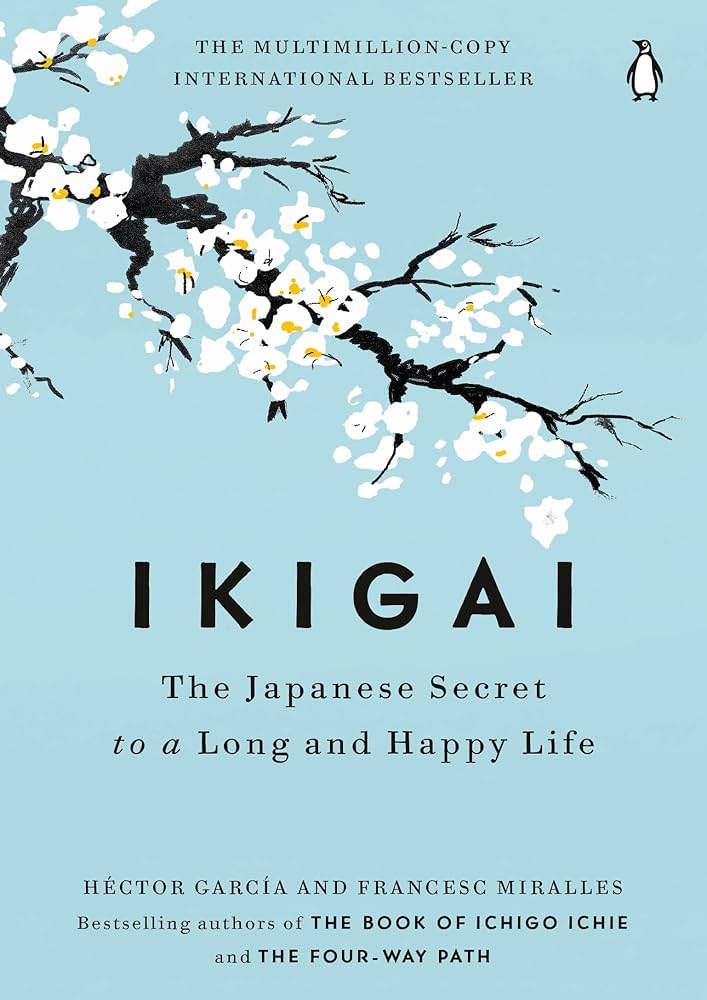
Ikigai: The Japanese Secret to a Long and Happy Life by Héctor García (also known as Kirai) and Francesc Miralles is a bestselling exploration of the Japanese concept of ikigai — a reason for being that infuses daily life with purpose, joy, and meaning. Published in 2017, the book draws heavily from the authors’ time in Okinawa, Japan, particularly the village of Ogimi, home to one of the world’s highest concentrations of centenarians. Blending philosophy, psychology, interviews with long-lived elders, scientific insights, and practical advice, Ikigai offers a holistic blueprint for not just living longer, but living better.
At its core, ikigai (roughly translated as “the happiness of always being busy” or “a reason to get up in the morning”) represents the intersection of four elements: what you love, what you are good at, what the world needs, and what you can be paid for. When these overlap, life gains profound satisfaction and direction. The book argues that discovering and nurturing this personal ikigai is a key factor in the remarkable longevity and happiness observed in Okinawa, one of the original Blue Zones.
Understanding Ikigai: More Than Just Purpose
The authors explain that ikigai is not a grand, once-in-a-lifetime discovery but something smaller and more immediate — the small joys and motivations that make each day worthwhile. In Japanese culture, it is deeply personal and evolves over time. Everyone has one, even if they haven’t named it yet.
Unlike Western notions of a single life passion or career calling, ikigai emphasizes staying active, engaged, and connected regardless of age. Many Okinawans never truly “retire” in the Western sense because they continue doing what they love — whether gardening, teaching, crafting, or community work — well into their 90s and 100s. This sustained sense of purpose correlates with lower rates of heart disease, dementia, and stress-related illnesses.
The book opens with the authors’ journey to Ogimi, where they interview centenarians who share simple yet profound wisdom. These elders often credit their long lives to a combination of ikigai, strong social bonds, healthy eating, gentle movement, and a resilient mindset.
The Ikigai Venn Diagram and Finding Your Own
A central visual in the book (and popular across the internet) is the Venn diagram illustrating ikigai as the sweet spot where passion, vocation, mission, and profession converge. García and Miralles guide readers through reflective exercises to identify their own ikigai:
- What do you love doing?
- What are you naturally good at?
- What does the world need that you can contribute to?
- What can you be rewarded for?
Finding it often requires patience, experimentation, and introspection rather than a sudden epiphany. The process itself brings clarity and reduces the existential anxiety many feel in modern life.
Lessons from Okinawa’s Centenarians: Ikigai – The Japanese Secret to a Long and Happy Life
Okinawa serves as the living laboratory for the book’s teachings. Key habits observed include:
Never Retire: Okinawans stay busy with meaningful activities. Purpose provides motivation and mental stimulation that keeps the brain and body young.
Live in the Moment: They practice a form of mindful presence, savoring daily routines without rushing. This reduces stress and enhances appreciation of life’s small pleasures.
Strong Social Connections (Moai): A moai is a lifelong group of close friends who support one another emotionally, financially if needed, and socially. These tight-knit circles combat loneliness — a known risk factor for shortened lifespan.
Gentle, Consistent Movement: Activities like walking, gardening, traditional dances, and martial arts (such as karate) are integrated naturally into daily life rather than forced intense workouts.
Healthy Diet: The Okinawan diet emphasizes vegetables, tofu, miso, seaweed, sweet potatoes, turmeric, and green tea. A key rule is hara hachi bu — eat until you are 80% full. Meals are varied, colorful, and consumed mindfully. Antioxidant-rich foods and moderate calorie intake play major roles in longevity.
Flow, Anti-Aging, and Resilience
The authors connect ikigai to Mihaly Csikszentmihalyi’s concept of “flow” — that state of complete immersion where time seems to disappear. Engaging in activities that challenge us at the right level (not too easy to bore, not too hard to overwhelm) keeps us youthful and fulfilled.
They explore stress management through lenses like logotherapy (Viktor Frankl’s search for meaning) and Morita therapy, a Japanese approach that encourages accepting emotions while taking purposeful action anyway. Resilience is framed through wabi-sabi — the Japanese aesthetic of embracing imperfection and transience — which helps people accept aging and life’s uncertainties gracefully.
An active mind is emphasized as crucial. Reading, learning, solving problems, and staying curious prevent cognitive decline. The book also covers the biology of aging, the harmful effects of chronic stress (cortisol), and how purpose buffers against it.
The Ten Rules of Ikigai
In the concluding sections, the authors distill their findings into practical “rules” for readers:
- Stay active; don’t retire.
- Take it slow — avoid hurry and urgency.
- Don’t overeat (hara hachi bu).
- Surround yourself with good friends (moai).
- Get in shape for your next birthday.
- Live in the moment.
- Follow your ikigai.
- Be optimistic and grateful.
- Accept that nothing lasts forever (wabi-sabi and impermanence).
- Embrace community and give back.
These are not rigid commandments but gentle guidelines rooted in observed centenarian lifestyles.
Broader Wisdom: Philosophy, Psychology, and Eastern Practices
Beyond Okinawa, the book weaves in Japanese concepts like kaizen (continuous small improvements), forest bathing (shinrin-yoku), and lessons from Japanese art and haiku. It discusses how modern life — with its constant busyness, digital distractions, and retirement culture — often disconnects people from their natural ikigai. The antidote is deliberate reconnection with purpose, body, community, and nature.
Practical tools include meditation techniques, breathing exercises, simple stretches, and dietary recommendations that readers can adopt immediately.
Criticisms and Enduring Appeal
Some critics note that Ikigai is relatively light on rigorous scientific data, relying more on anecdotal evidence and storytelling. The ikigai Venn diagram, while popular, is presented as a modern interpretation rather than a strictly traditional Japanese framework. The book’s brevity and accessible style make it inspirational but occasionally surface-level for readers seeking deeper academic analysis.
Nevertheless, its charm lies in its warmth, practicality, and optimism. In a world grappling with mental health challenges, burnout, aging populations, and loss of meaning, Ikigai offers a refreshing counter-narrative: a long, happy life is achievable through simple, consistent, purposeful living.
Why Ikigai Matters Today
As of 2026, with increasing awareness of Blue Zones research and growing interest in longevity science (from fasting to NAD+ supplements), the book’s core message remains profoundly relevant. Technology and AI may extend lifespans, but ikigai addresses the equally important question of how to fill those extra years with vitality and joy.
The book encourages readers to ask: What gets you out of bed excited each morning? What can you contribute that feels meaningful? By aligning daily habits with this inner compass, anyone — regardless of age, background, or location — can cultivate greater happiness and resilience.
Ikigai is ultimately a love letter to the art of living. It reminds us that longevity is not merely about adding years to life, but adding life to years. Through purpose, community, mindful habits, and gentle persistence, we can all move closer to the serene, fulfilling existence modeled by Okinawa’s elders.
In the words of the centenarians interviewed: Stay busy doing what you love, nurture your connections, eat modestly and well, and embrace each day with gratitude. That is the Japanese secret to a long and happy life.
