
Post
Norwegian Wood – A Story of Love, Loss, and Memory
May
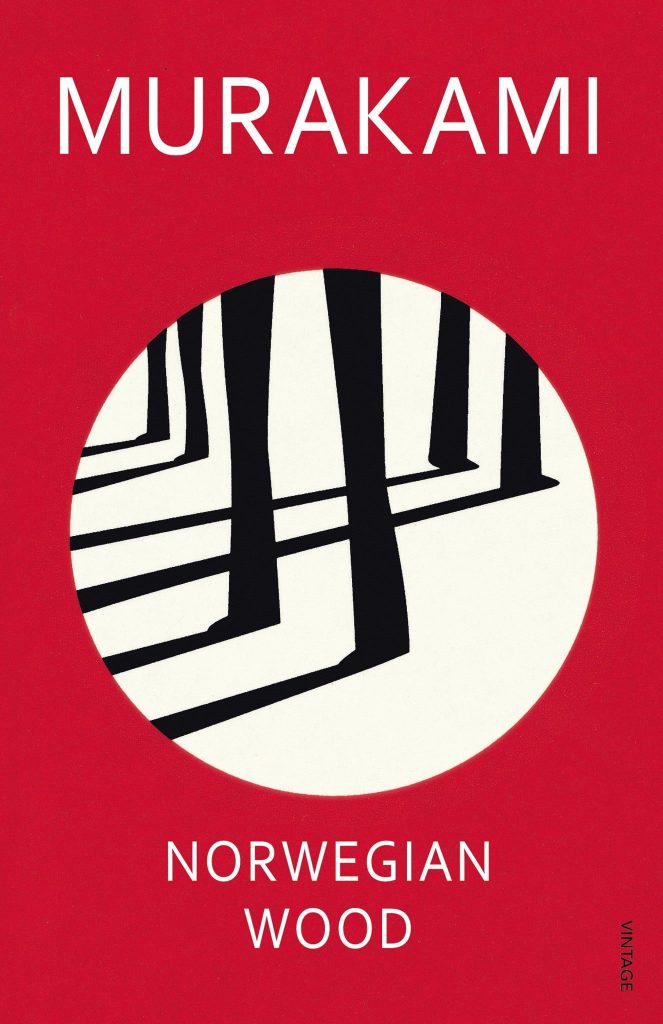
Norwegian Wood: A Story of Love, Loss, and Memory by Haruki Murakami is a hauntingly beautiful coming-of-age novel that marked the Japanese author’s breakthrough into international literary stardom. First published in Japan in 1987, the book sold millions of copies domestically and later became a global sensation when translated into English in 2000. Unlike Murakami’s more surreal, metaphysical works such as Kafka on the Shore or 1Q84, Norwegian Wood is grounded in emotional realism, making it his most accessible and deeply personal novel. It remains one of his most beloved and bestselling books worldwide.
Set against the backdrop of late-1960s Tokyo, the story is narrated in the first person by Toru Watanabe, a quiet, introspective university student looking back on his youth from the vantage point of adulthood. The title is taken from the famous Beatles song, which plays a pivotal emotional role in the narrative. At its core, Norwegian Wood is a melancholic meditation on love, grief, sexuality, mental illness, and the painful transition from adolescence to adulthood.
A Tale of Two Women and One Young Man
The novel opens with Toru hearing the song “Norwegian Wood” on a plane many years later, triggering a flood of memories from his late teens. The central story revolves around his relationships with two very different young women: Naoko and Midori.
Naoko is the delicate, emotionally fragile girlfriend of Toru’s best friend, Kizuki, who dies by suicide at the age of seventeen. After Kizuki’s death, Toru and Naoko grow closer, drawn together by shared grief. Their relationship is tender yet tormented. Naoko struggles with deep psychological trauma and eventually retreats to a secluded sanatorium in the mountains. Toru’s love for her becomes intertwined with sorrow and a sense of irretrievable loss.
In contrast, Midori Kobayashi enters Toru’s life as a vibrant, outspoken, and sexually liberated counterpoint to Naoko. Bold, funny, and full of life, Midori represents possibility, vitality, and the chaotic energy of the present moment. Torn between these two women — one associated with the past and gentle melancholy, the other with the future and passionate immediacy — Toru must navigate his own emotional confusion, sexual awakening, and growing awareness of mortality.
Supporting characters like Reiko, a musician and fellow patient at the sanatorium, and Nagasawa, Toru’s ambitious but cynical friend, add depth and complexity to the exploration of human connection and isolation.
Major Themes: Love, Loss, and the Weight of Memory: Norwegian Wood – A Story of Love, Loss, and Memory
Norwegian Wood is fundamentally a novel about memory. The act of remembering is both beautiful and painful; it preserves moments of love and joy while simultaneously reopening old wounds. Toru’s narration is drenched in nostalgia, creating an atmosphere of wistful longing that permeates every page.
Love and loss are portrayed with raw honesty. Murakami does not romanticize young love; instead, he shows how it can be intertwined with death, depression, and self-destruction. The novel explores different forms of love — romantic, platonic, sexual, and healing — and how each can both save and wound us.
Mental health and suicide form a dark but compassionate thread throughout the story. Murakami depicts depression and emotional fragility not as dramatic plot devices but as quiet, pervasive forces that shape lives. The high suicide rate among Japanese youth in the 1960s serves as a somber backdrop, reflecting broader societal pressures and the difficulty many young people face in finding meaning.
Sexuality and growing up are treated with remarkable frankness for its time. The novel contains several explicit scenes that were considered bold in 1980s Japan. Toru’s sexual experiences are portrayed as both liberating and emotionally complicated, part of the messy process of becoming an adult.
Another significant theme is isolation versus connection. Characters repeatedly struggle to truly understand one another despite physical intimacy or emotional declarations. The novel suggests that while complete understanding may be impossible, the attempt itself — the willingness to listen and care — holds redemptive power.
Murakami’s Lyrical Realism
Stylistically, Norwegian Wood stands apart from much of Murakami’s oeuvre. While it retains his signature attention to detail — particularly regarding music, food, and everyday rituals — it largely avoids the magical realism and talking cats found in his other works. The prose is elegant, understated, and deeply atmospheric. Murakami’s simple, rhythmic sentences create an almost hypnotic melancholy that mirrors the emotional state of the characters.
Music plays an essential role, functioning almost as a character. References to the Beatles, classical composers, and jazz help define the emotional landscape and transport readers to the specific cultural moment of late-1960s Japan, a time of student protests, cultural upheaval, and Western influence.
The novel’s structure — moving fluidly between past and present — enhances its themes of memory and reflection. Readers feel as though they are experiencing Toru’s reminiscences alongside him.
Cultural Impact and Reception
In Japan, Norwegian Wood was a cultural phenomenon that appealed to both young readers and older audiences. It captured the disillusionment of a generation coming of age during a turbulent period. Internationally, the book introduced countless readers to Murakami’s work and Japanese contemporary literature. Its success helped pave the way for the global popularity of Japanese fiction.
The novel was adapted into a well-received film directed by Tran Anh Hung in 2010, which visually captured the novel’s dreamy, melancholic beauty.
Criticisms
Despite its widespread acclaim, Norwegian Wood has faced criticism. Some readers find the portrayal of female characters — particularly Naoko’s fragility and Midori’s overt sexuality — somewhat stereotypical or viewed primarily through the male gaze. Others argue that the novel’s pervasive melancholy can feel emotionally heavy or even glamorize depression and suicide.
Certain critics have noted that while the book excels at atmosphere and emotion, its plot can feel meandering, with some sections lingering longer than necessary on Toru’s internal reflections. Nevertheless, these critiques have done little to diminish the novel’s enduring popularity or emotional resonance for most readers.
Why Norwegian Wood Endures in 2026
In today’s fast-paced, hyper-connected world, Norwegian Wood feels more relevant than ever. Mental health awareness has grown significantly, yet loneliness, anxiety, and the pressure to find purpose remain widespread, especially among young adults. The novel’s sensitive treatment of grief, depression, and the search for authentic connection offers solace and understanding.
Its exploration of love in the digital age — where relationships can feel both abundant and strangely superficial — strikes a chord. Many readers still find comfort in Toru’s quiet introspection amid constant noise and distraction. The book also serves as a poignant reminder of the power of memory and the importance of processing past wounds rather than endlessly scrolling away from them.
For new generations discovering Murakami, Norwegian Wood often serves as the perfect entry point — more grounded and emotionally direct than his wilder novels, yet still possessing his distinctive sensitivity and insight into the human condition.
Final Reflections
Norwegian Wood is ultimately a novel about learning to live with loss. It acknowledges that some wounds never fully heal, some people never return, and some questions remain unanswered. Yet within this melancholy lies a quiet hope: the possibility of healing through memory, through new connections, and through the simple acts of listening to music, reading books, and caring for others.
Paulo Coelho once described the book as capturing “the nostalgia of youth,” and that description remains apt. It is a story that stays with readers long after the final page, much like a half-remembered melody that surfaces unexpectedly years later, bringing both sweetness and ache.
Whether you are navigating your own coming-of-age, mourning a lost love, or simply reflecting on the passage of time, Norwegian Wood offers companionship and profound beauty. It reminds us that even in our darkest moments, the human capacity for love, memory, and quiet resilience endures.
In the end, Toru Watanabe — and through him, Haruki Murakami — teaches us that while we cannot escape loss, we can learn to carry it with grace, and perhaps, in doing so, move gently forward into whatever comes next.
