
Post
The Psychology of Money – Understanding Wealth, Greed, and Happiness 2026
May
The Psychology of Money – Understanding Wealth, Greed, and Happiness 2026
Introduction
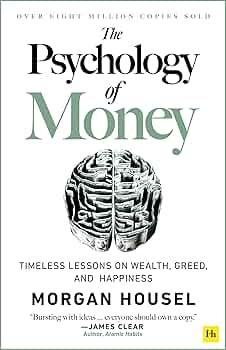
In the world of personal finance, most advice focuses on numbers—how to invest, how to save, how to grow wealth. However, The Psychology of Money by Morgan Housel takes a completely different approach. Instead of formulas and technical strategies, it explores something far more important: how people think about money.
Financial success is often assumed to be the result of intelligence, education, or access to information. But in reality, behavior plays a much larger role than knowledge. Two people with the same financial knowledge can make entirely different decisions based on their emotions, experiences, and personal beliefs.
Financial success is often assumed to be the result of intelligence, education, or access to information. But in reality, behavior plays a much larger role than knowledge. Two people with the same financial knowledge can make entirely different decisions based on their emotions, experiences, and personal beliefs.
This book explains why people make irrational financial decisions, how mindset influences wealth, and what truly matters when it comes to money. It is not just a finance book—it is a guide to understanding human behavior in the context of money.
Why Psychology Matters More Than Math
One of the central ideas in the book is that managing money is not a mathematical problem—it is a behavioral one.
Traditional finance assumes that people are rational. It assumes that:
- People always make logical decisions
- People always choose the best financial option
- People act based on data and evidence
In reality, none of these assumptions are entirely true.
People:
- Panic during market crashes
- Spend impulsively
- Follow trends without understanding them
- Let emotions influence decisions
Morgan Housel argues that financial success depends less on how much you know and more on how you behave.
The Role of Personal Experience
Everyone has a different relationship with money because everyone has a different life experience.
For example:
- Someone who grew up in poverty may prioritize saving and security
- Someone raised in wealth may take more risks
These experiences shape:
- Risk tolerance
- Spending habits
- Investment decisions
This is why financial advice is not one-size-fits-all. What works for one person may not work for another.
Luck and Risk: Two Invisible Forces
One of the most important lessons in the book is understanding the role of luck and risk.
Success is not always earned purely through hard work, and failure is not always due to poor decisions.
For example:
- A successful investor may have benefited from timing
- A failed business may have been affected by external factors
Recognizing this helps you:
- Stay humble during success
- Avoid harsh judgment during failure
It also prevents overconfidence, which can lead to risky decisions.
The Power of Compounding
Compounding is often described as the most powerful force in finance.
But compounding is not just about money—it’s about behavior.
Small actions, repeated consistently over time, can lead to massive outcomes.
For example:
- Saving a small amount regularly
- Investing consistently
- Avoiding unnecessary risks
The key is patience. Compounding takes time, and many people fail because they expect quick results.
Wealth vs Richness
The book makes an important distinction between being rich and being wealthy.
- Rich = high income or visible assets
- Wealth = money you don’t spend
Many people focus on appearing rich:
- Expensive cars
- Luxury items
- High lifestyle expenses
But true wealth is built by:
- Saving
- Investing
- Living below your means
Wealth is invisible, and that’s why it is often misunderstood.
Freedom: The Ultimate Goal of Money
According to Housel, the greatest benefit of money is not luxury—it is freedom.
Money gives you the ability to:
- Control your time
- Make independent decisions
- Avoid stress
This idea changes how we think about financial success.
According to Housel, the greatest benefit of money is not luxury—it is freedom.
Money gives you the ability to:
- Control your time
- Make independent decisions
- Avoid stress
This idea changes how we think about financial success.
Instead of chasing status, the focus shifts to:
- Flexibility
- Security
- Peace of mind
The Danger of Lifestyle Inflation
As income increases, people tend to increase their spending.
This is known as lifestyle inflation.
For example:
- Higher salary → bigger house
- Higher income → more expensive lifestyle
While this may feel rewarding in the short term, it can prevent long-term wealth accumulation.
The book suggests:
- Keeping expenses under control
- Prioritizing savings over status
Long-Term Thinking and Patience
Successful investing is not about short-term gains.
It is about:
- Staying consistent
- Avoiding emotional decisions
- Thinking long-term
Many investors fail because they:
- React to market fluctuations
- Try to time the market
- Chase trends
Patience is one of the most underrated skills in finance.
The Importance of a Margin of Safety
Life is unpredictable.
Unexpected events can include:
- Job loss
- Medical emergencies
- Economic downturns
Having a financial cushion provides security.
This includes:
- Emergency savings
- Conservative planning
- Avoiding excessive risk
Reasonable vs Rational Decisions: The Psychology of Money – Understanding Wealth, Greed, and Happiness
Another key idea is that people should aim to be reasonable, not perfectly rational.
Perfect rationality is unrealistic because:
- Emotions are part of decision-making
- People have biases
- Life is uncertain
Making decisions that are sustainable and comfortable is often better than trying to optimize every outcome.
Common Financial Mistakes
The book highlights several mistakes people make:
- Overconfidence
- Ignoring risk
- Chasing quick profits
- Comparing with others
- Focusing on short-term gains
Avoiding these mistakes is often more important than finding the perfect strategy.
Real-Life Applications
Personal Finance
- Spend less than you earn
- Save consistently
Investing
- Stay patient
- Avoid emotional decisions
Career
- Focus on long-term growth
Strengths of the Book
- Easy to understand
- Focuses on behavior, not theory
- Highly relatable
- Applicable to everyone
Weaknesses of the Book
- Lacks technical financial strategies
- Some repetition
Final Thoughts
The Psychology of Money offers a powerful reminder that money is not just about numbers—it is about behavior.
The key lesson:
Good financial decisions come from good habits, not complex strategies.
Conclusion
If you want to improve your financial life, understanding your behavior is more important than mastering formulas. This book provides a clear, practical, and realistic approach to money that anyone can apply.
