
Post
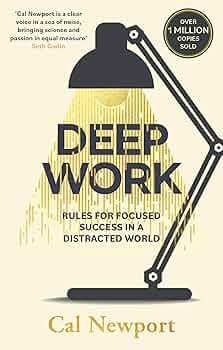
Deep Work – Rules for Focused Success in a Distracted World 1
May
Introduction
In an age dominated by constant notifications, social media, and endless streams of information, the ability to focus has become increasingly rare. Yet, at the same time, it has also become one of the most valuable skills in the modern world. This is the central idea explored in Deep Work by Cal Newport.
Deep Work is not just another productivity book. It is a powerful argument for reclaiming focus in a world designed to distract you. The book explains why deep, concentrated work is essential for success and provides practical strategies to cultivate this ability in everyday life.
Whether you are a student, developer, writer, or professional, the principles in this book can help you produce higher-quality work, learn faster, and achieve meaningful results.
What Is Deep Work?
Cal Newport defines deep work as:
Professional activities performed in a state of distraction-free concentration that push your cognitive capabilities to their limit.
This type of work is:
- Highly focused
- Mentally demanding
- Valuable and difficult to replicate
In contrast, shallow work consists of tasks that:
- Require little cognitive effort
- Are often performed while distracted
- Do not create much long-term value
Examples of shallow work include:
- Checking emails repeatedly
- Attending unnecessary meetings
- Scrolling through social media
While shallow work may feel productive, it rarely leads to meaningful progress.
Why Deep Work Matters More Than Ever
In the modern economy, success increasingly depends on your ability to perform deep work. Newport highlights two key abilities that are crucial:
- The ability to quickly master hard things
- The ability to produce high-quality work efficiently
Both of these require intense focus.
However, most people struggle because modern environments are designed for distraction:
- Smartphones demand constant attention
- Social media encourages quick dopamine hits
- Open office spaces interrupt concentration
As a result, deep work is becoming rare—making it even more valuable.
The Deep Work Hypothesis
Newport introduces a compelling idea:
The ability to perform deep work is becoming rare at exactly the same time it is becoming more valuable.
This creates a significant opportunity.
If you can develop the skill of deep work, you gain a competitive advantage over others who are constantly distracted.
The Cost of Distraction: Deep Work – Rules for Focused Success in a Distracted World
Distraction is not just a minor inconvenience—it has serious consequences.
When you switch tasks frequently:
- Your brain loses focus
- Productivity decreases
- Work quality suffers
This phenomenon is known as attention residue. When you move from one task to another, part of your attention remains stuck on the previous task.
Over time, constant distraction leads to:
- Lower efficiency
- Increased stress
- Reduced creativity
The Four Rules of Deep Work
To help readers cultivate focus, Newport introduces four key rules.
1. Work Deeply
Deep work does not happen by accident—it requires intentional effort.
To work deeply, you need:
- A dedicated workspace
- A fixed schedule
- Clear goals
Creating rituals helps your brain enter a focused state more easily.
Examples:
- Working at the same time every day
- Eliminating distractions before starting
- Setting specific targets for each session
2. Embrace Boredom
Many people struggle with focus because they are addicted to stimulation.
Every time you check your phone, you train your brain to seek distraction.
To build focus, you must:
- Resist the urge to check devices constantly
- Practice staying with a task even when it feels boring
Learning to tolerate boredom strengthens your ability to concentrate.
3. Quit Social Media
Not all tools are beneficial.
Social media platforms are designed to capture attention, often at the expense of productivity.
Newport suggests evaluating each tool based on:
- Whether it provides significant value
- Whether it aligns with your goals
If a tool does not contribute meaningfully, it may be worth eliminating.
4. Drain the Shallows
Shallow work is unavoidable, but it should be minimized.
Strategies include:
- Scheduling your day in advance
- Limiting time spent on low-value tasks
- Reducing unnecessary meetings
The goal is to create more time for deep work.
Deep Work Philosophies
Newport outlines several approaches to integrating deep work into your life.
Monastic Philosophy
Eliminate all distractions and focus entirely on deep work.
Bimodal Philosophy
Divide time between deep work and other responsibilities.
Rhythmic Philosophy
Establish a daily routine for deep work.
Journalistic Approach
Fit deep work into your schedule whenever possible.
Each approach has its advantages depending on your lifestyle.
The Role of Environment
Your environment plays a crucial role in your ability to focus.
A well-designed environment can:
- Reduce distractions
- Improve concentration
- Increase productivity
Examples:
- A quiet workspace
- Minimal digital interruptions
- Organized desk
Small changes in your environment can lead to significant improvements in focus.
Building a Deep Work Habit
Deep work is not a one-time effort—it is a habit that must be developed.
Steps to build this habit:
- Start with short sessions
- Gradually increase duration
- Track your progress
- Stay consistent
Consistency is more important than intensity.
Real-Life Applications
Students
Deep work improves learning and retention.
Developers
Writing code requires intense concentration.
Writers
Focused sessions lead to higher-quality content.
Professionals
Deep work increases efficiency and career value.
Challenges of Deep Work
Despite its benefits, deep work is difficult to maintain.
Common challenges include:
- Digital distractions
- Lack of discipline
- Work environments that encourage multitasking
Overcoming these challenges requires intentional effort and system design.
Strengths of the Book
- Practical and actionable
- Highly relevant in modern life
- Clear and structured framework
- Applicable to many professions
Weaknesses of the Book
- Some ideas may feel extreme
- Requires discipline to implement
- Not all strategies suit every lifestyle
Key Takeaways
- Focus is a valuable skill
- Distraction reduces productivity
- Deep work leads to meaningful results
- Consistency builds long-term success
Final Thoughts
Deep Work is a powerful reminder that in a distracted world, focus is a superpower.
Those who can cultivate deep work will:
- Learn faster
- Produce better work
- Achieve greater success
Conclusion
If you want to improve your productivity and create meaningful results, developing the ability to focus deeply is essential. Deep Work improve your productivity and create meaningful results, developing the ability to focus deeply provides a practical roadmap for mastering this skill and gaining a competitive edge in the modern world.
