
Post
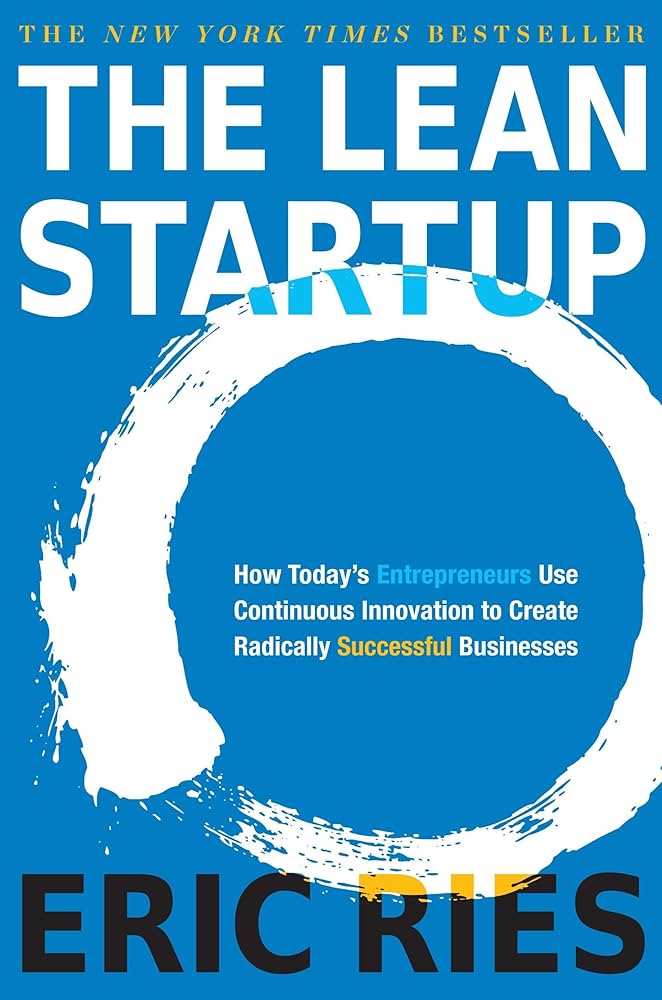
The Lean Startup – How Today’s Entrepreneurs Use Continuous Innovation to Create Radically Successful Businesses 1
May
The Lean Startup: How Today’s Entrepreneurs Use Continuous Innovation to Create Radically Successful Businesses by Eric Ries is a groundbreaking guide that has reshaped how entrepreneurs, innovators, and large organizations approach building new products and ventures. Published in 2011, the book draws on Ries’s experiences as a startup founder (notably with IMVU) and his study of lean manufacturing principles from Toyota, agile software development, and customer development methodologies. It introduces a scientific, iterative framework for navigating the extreme uncertainty of startups, emphasizing learning over intuition, speed over perfection, and validated data over vanity metrics.
Unlike traditional business planning, which assumes founders can predict the future through detailed upfront strategies, The Lean Startup argues that startups operate in conditions of radical uncertainty. Success comes not from flawless execution of a fixed plan but from a continuous process of experimentation, measurement, and adaptation. The methodology has been adopted by thousands of startups, corporate innovation labs, and even government agencies worldwide.
Part 1: Vision – Redefining Entrepreneurship and Progress
Ries begins by challenging conventional wisdom. Entrepreneurs are everywhere—not just in garages or Silicon Valley but within any organization seeking to create new products under uncertainty. A startup is “a human institution designed to create a new product or service under conditions of extreme uncertainty.” This definition broadens the book’s relevance far beyond tech founders.
Traditional management practices, optimized for established companies with known customers and predictable markets, fail in startups. Ries introduces validated learning as the core unit of progress. Instead of measuring success by how much code is written, revenue generated early, or features shipped, startups must focus on learning what customers truly want through rigorous testing of assumptions.
One of the book’s foundational stories comes from Ries’s time at IMVU. After previous failures where teams built products in isolation, they shifted to releasing early, imperfect versions and iterating based on real user data. This approach dramatically accelerated learning and reduced waste.
The Build-Measure-Learn Feedback Loop: The Heart of the Methodology
At the center of The Lean Startup is the Build-Measure-Learn feedback loop. Entrepreneurs turn ideas into products (Build), measure how customers respond (Measure), and learn whether to pivot or persevere (Learn). The goal is to minimize the time it takes to complete this loop.
- Build: Create a Minimum Viable Product (MVP)—the smallest version of a product that allows a team to collect the maximum amount of validated learning about customers with the least effort. The MVP tests core hypotheses, especially the riskiest ones first. It is not a low-quality product but a strategic tool for learning.
- Measure: Use actionable metrics rather than vanity metrics. Vanity metrics (e.g., total registered users, page views) make founders feel good but don’t inform decisions. Actionable metrics tie directly to cause-and-effect (e.g., customer retention rates, revenue per customer, activation rates). Ries introduces Innovation Accounting to track progress rigorously: establish a baseline with the MVP, tune the engine through iterations, and decide on a pivot or perseverance when clear data emerges.
- Learn: Confront the hard truths in the data. Learning is not about feeling smarter; it is about confirming or invalidating assumptions about customer value and growth.
This loop draws from lean manufacturing’s emphasis on eliminating waste (muda). In startups, waste includes building features no one wants, spending months on untested plans, or scaling prematurely.
Pivot or Persevere: The Make-or-Break Decision
A major theme is knowing when to change direction. A pivot is a structured course correction designed to test a new fundamental hypothesis about the product, strategy, or engine of growth. Ries catalogs several types of pivots: zoom-in, zoom-out, customer segment, customer need, platform, value capture, engine of growth, channel, technology, and more.
Famous examples include Instagram pivoting from a location-based check-in app (Burbn) to a photo-sharing app, or Twitter emerging from Odeo’s podcasting platform. The key is using validated learning to make this decision objectively rather than emotionally or based on sunk costs.
Part 3: Accelerate – Speeding Up the Engine
Once validated, startups must accelerate without losing the ability to learn. Ries discusses techniques like continuous deployment (frequent, small releases), small batch sizes (reducing inventory of untested ideas), and the three engines of growth:
- Sticky (focus on retention and high lifetime value)
- Viral (growth through user referrals)
- Paid (customer acquisition through advertising, where margins support spending)
Companies often combine these, but understanding the primary engine helps prioritize metrics and experiments.
Additional tools include the Five Whys for root-cause analysis (asking “why” repeatedly to uncover underlying problems rather than symptoms) and adaptive organizational structures that maintain innovation even as the company scales.
Practical Applications and Real-World Examples
Ries fills the book with case studies from his experiences and companies like Intuit, Dropbox, and Zappos. Dropbox famously used a simple video MVP to validate demand before building the full product, dramatically reducing development risk. Many corporate innovation teams have applied Lean Startup principles to launch internal products faster and with higher success rates.
The methodology extends beyond software. Physical product companies use MVPs through 3D printing or mockups, while service businesses test offerings with concierge MVPs (manually delivering the service before automating).
Strengths and Criticisms
The Lean Startup’s greatest strength is its actionable, scientific mindset. It demystifies entrepreneurship, replacing “genius” myths with a repeatable process. It has influenced the entire startup ecosystem, popularizing terms like MVP and pivot.
Critics argue it can be misinterpreted as “build junk and iterate,” leading to poor-quality products or endless pivoting without vision. Some say it underemphasizes bold vision or works less well for deep-tech, hardware, or highly regulated industries where iteration cycles are slower or regulatory approval is required. In the AI era of 2026, rapid prototyping with large language models compresses build times dramatically, but the core loop of hypothesis-testing remains vital.
Others note that while the book promotes customer focus, over-reliance on early feedback can lead to incrementalism rather than breakthrough innovation. Visionary leaps sometimes require ignoring current customers (as Steve Jobs famously did).
Despite these points, the principles of reducing waste, measuring what matters, and adapting quickly have proven remarkably durable.
Why The Lean Startup Remains Essential: The Lean Startup – How Today’s Entrepreneurs Use Continuous Innovation to Create Radically Successful Businesses
In today’s fast-changing world—marked by AI disruption, economic uncertainty, and shifting consumer behaviors—the need for disciplined experimentation is greater than ever. Large corporations use it for internal venturing; nonprofits and social enterprises apply it to maximize impact with limited resources.
Ries emphasizes that entrepreneurship is management. Founders must create systems for learning, accountability, and speed. The book ends on an optimistic note: by embracing continuous innovation, we can build organizations that not only survive but thrive by creating genuine value for customers.
Key takeaways for readers:
- Start with assumptions, not certainties.
- Build MVPs to test hypotheses quickly.
- Measure actionable metrics through innovation accounting.
- Use data to pivot decisively or double down.
- Eliminate waste at every stage.
- Foster a culture of experimentation and learning.
The Lean Startup is not a formula for guaranteed success—nothing is in entrepreneurship—but a powerful framework for increasing the odds dramatically. It teaches that failure is not the opposite of success; failure to learn from failure is. By turning ideas into validated products through continuous innovation, today’s entrepreneurs can build radically successful businesses that matter.
Whether you are a solo founder, part of a corporate team, or simply curious about innovation, this book offers timeless wisdom: in uncertainty, the fastest learner wins.
