
Post
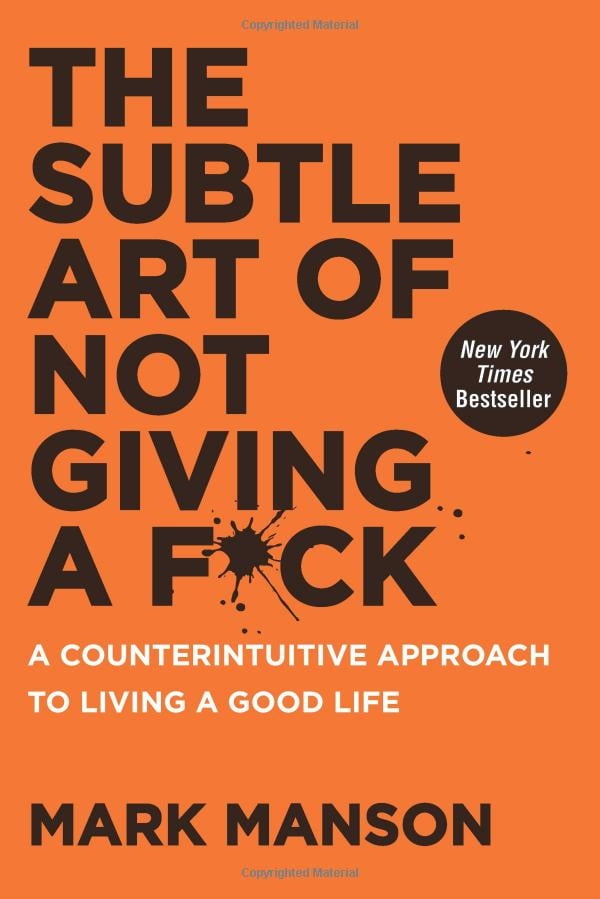
The Subtle Art of Not Giving a F*ck – A Counterintuitive Approach to Living a Good Life 2026
May
The Subtle Art of Not Giving a F*ck: A Counterintuitive Approach to Living a Good Life by Mark Manson is a raw, no-nonsense self-help book that became a global phenomenon after its release in 2016. Manson, a blogger known for his brutally honest writing style, rejects the glossy positivity culture of traditional self-help and instead offers a refreshing philosophy rooted in realism, personal responsibility, and selective caring. The book has sold millions of copies worldwide precisely because it tells uncomfortable truths with humor, profanity, and clarity. It argues that a good life is not about feeling good all the time or pursuing constant happiness, but about learning what matters enough to care about — and what to let go.
The Core Idea: Choose Your F*cks Wisely
Manson’s central thesis is simple yet profound: you have a limited number of things you can care about. “Not giving a fuck” does not mean apathy or indifference. It means being selective with your attention and emotional energy. By caring about fewer things — the right things — you actually gain the freedom to care more deeply about what truly improves your life.
He introduces the concept of the Feedback Loop from Hell: You feel bad about feeling bad. You worry about worrying. This spiral of meta-emotions traps many people in anxiety and unhappiness. The solution is acceptance — acknowledging negative emotions without judging yourself for having them. Life is suffering, and the sooner you accept that, the sooner you can move forward.
You Are Not Special — And That’s Liberating
One of the book’s most contrarian chapters dismantles the modern culture of entitlement. Manson argues that the “self-esteem movement” and social media have convinced too many people they are exceptional and deserve success without effort. In reality, most of us are average, and that is perfectly okay.
True growth comes from embracing your ordinariness. When you stop believing the world owes you happiness, you become free to solve real problems. Manson writes, “The desire for more positive experience is itself a negative experience. And, paradoxically, the acceptance of one’s negative experience is itself a positive experience.” This paradox lies at the heart of the book.
The Value of Suffering and Choosing Better Problems
Manson emphasizes that problems never disappear — they only get exchanged for better ones. A good life is defined by the quality of problems you choose to solve. Want a great relationship? Then you must accept the problems of vulnerability, conflict, and compromise. Want a meaningful career? Then you must accept the problems of stress, uncertainty, and hard work.
He uses the example of rock stars and celebrities who achieved everything they thought they wanted, only to spiral into addiction and misery because they never learned to value simple, everyday struggles. Happiness comes from solving problems, not from reaching a problem-free state (which doesn’t exist).
Responsibility and Radical Ownership
A recurring theme is taking radical responsibility for your life. Blaming others — parents, society, ex-partners, the economy — keeps you powerless. Manson stresses that while you may not control what happens to you, you always control how you respond. Even in extreme circumstances, there is space for choice in your interpretation and next actions.
This idea echoes Stoic philosophy but is delivered in modern, accessible language. Taking responsibility is not about self-blame; it is about empowerment. It frees you from victimhood.
Uncertainty, Rejection, and the Importance of Saying No
Manson encourages readers to become comfortable with uncertainty and failure. The pursuit of certainty leads to rigidity and disappointment. Instead, embrace doubt and use it as fuel for curiosity and growth.
He also champions the power of rejection. Learning to say “no” and accepting that not everyone will like you is essential for mental health. Boundaries protect your limited “fucks” for the people and activities that matter most. Manson shares personal stories of his own failures, breakups, and career setbacks to illustrate how rejection and pain shaped him positively.
Death as the Ultimate Motivator
In one of the strongest sections, Manson confronts mortality head-on. Contemplating death clarifies what is truly important. When you realize your time is finite, trivial worries lose their grip. This awareness encourages living authentically rather than chasing external validation or material excess.
He contrasts superficial values (money, fame, beauty, pleasure) with better values (honesty, courage, humility, creativity, meaningful contribution). Superficial values are uncontrollable and never satisfied. Better values are internal, controllable, and lead to long-term fulfillment.
Practical Lessons and How to Apply the Philosophy
While The Subtle Art is more philosophical than tactical, Manson offers actionable insights:
- Identify your current values and question them. Are they helping or harming you?
- Practice rejection therapy: deliberately seek small rejections to build resilience.
- Focus on process over outcomes: care about the daily effort rather than uncontrollable results.
- Embrace “negative” emotions: anger, sadness, and fear carry important information.
- Define success by your own metrics, not society’s.
The book is filled with relatable anecdotes from Manson’s travels, relationships, and internet career, making abstract ideas concrete and memorable.
Criticisms and Limitations: The Subtle Art of Not Giving a F*ck – A Counterintuitive Approach to Living a Good Life
Despite its success, the book has faced criticism. Some argue Manson’s tone, while refreshing, can come across as dismissive of serious mental health issues like clinical depression or trauma. Critics also note that the advice, though wise, sometimes lacks depth compared to classic philosophy or therapy models. The book draws heavily from Stoicism, Buddhism, and existentialism without always crediting those roots explicitly.
Others point out that its contrarian stance against positivity can feel overly cynical at times. In an era of genuine social and economic pressures, simply “not giving a fuck” may seem privilege-blind to some readers. However, Manson clarifies that the philosophy is about discernment, not detachment from all caring.
Why the Book Resonates in 2026
More than a decade after publication, The Subtle Art of Not Giving a Fck* feels even more relevant. Social media algorithms continue to amplify outrage, comparison, and performative success. Mental health statistics show rising anxiety and burnout, especially among younger generations bombarded with highlight reels.
Manson’s message cuts through the noise: you cannot care about everything. In the age of infinite information and endless notifications, choosing where to direct your limited attention is a superpower. The book’s emphasis on real values, personal responsibility, and accepting discomfort offers a powerful antidote to doom-scrolling, hustle culture, and toxic positivity.
Its influence extends beyond individuals. Companies and leaders increasingly recognize the value of psychological safety, honest feedback, and focusing on meaningful metrics rather than vanity ones. Parents and educators use its ideas to raise more resilient children who understand that failure and struggle are features, not bugs, of a good life.
Final Thoughts: A Manifesto for Authentic Living
The Subtle Art of Not Giving a Fck* is not a comfortable read. It will challenge your assumptions, make you laugh, and occasionally make you defensive. That discomfort is the point. Manson’s genius lies in packaging ancient wisdom in a voice that speaks directly to modern readers who are tired of empty affirmations and miracle cures.
The book ultimately delivers a hopeful message: a good life is within reach, not by chasing constant happiness or perfection, but by embracing your flaws, solving better problems, caring deeply about a few important things, and accepting the inevitable pain that comes with being human.
As Manson concludes, the subtle art is learning to give a fuck about something better — something real, something that lasts, something worth the struggle. In doing so, you stop living for other people’s approval and start building a life that feels authentically yours.
For anyone feeling overwhelmed, lost, or exhausted by trying to do and care about everything, this book serves as both a wake-up call and a liberating permission slip. Stop trying to be extraordinary at everything. Focus. Accept. Persist. Live.
